

The question “How many years did Jesus stay in Egypt?” is one that captivates the interest of many people, both scholars and casual readers alike. This period in the life of Jesus Christ is not only a significant historical event but also a deeply spiritual chapter, as detailed in the Gospel of Matthew. The journey of Jesus and his family to Egypt has long fascinated theologians and pilgrims alike. It is a story that speaks to divine protection, the fulfillment of prophecies, and the early life of the Savior. In this article, we will explore how many years Jesus stayed in Egypt, the key places associated with this journey, the spiritual significance of Egypt in Christian theology, and the miraculous events that occurred during their time there.
1. The Flight to Egypt: Biblical Context

The story begins in Bethlehem, where Jesus was born. Following His birth, the Magi (or Wise Men) traveled from the East, guided by a star, to find the newborn King of the Jews. They brought gifts of gold, frankincense, and myrrh, symbols of His divine nature and kingship. However, their arrival in Jerusalem led to a disturbed King Herod, who felt threatened by the news of a new king. As a result, Herod ordered the massacre of all male infants in Bethlehem and the surrounding areas (Matthew 2:16).
In the midst of this horror, an angel appeared to Joseph in a dream and warned him of the impending danger. He was instructed to take Mary and Jesus and flee to Egypt for safety. The angel told Joseph to remain in Egypt until the death of King Herod, as Herod had sought to destroy the newborn King.
“While in Cairo, don’t miss a visit to the Pyramids of Giza. Find out how you can book a Pyramids & Nile Tour with us.”
“If you plan to continue exploring Egypt after following the Holy Family’s path, be sure to check out our Luxor travel guide and experience the wonders of Karnak Temple and the Valley of the Kings.”
2. The Duration of Jesus’ Stay in Egypt
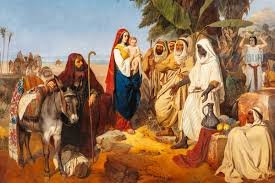
While the Bible does not explicitly specify the exact number of years Jesus spent in Egypt, the timing can be estimated through historical and biblical clues. The Gospel of Matthew suggests that the Holy Family remained in Egypt until after the death of King Herod, as the angel instructed Joseph to return to Israel (Matthew 2:19-20). This gives us some context to approximate the length of their stay.
2.1 Scholarly Estimates: Three to Four Years
Most scholars and historians estimate that Jesus, Mary, and Joseph spent approximately three to four years in Egypt. This conclusion is drawn from several key points:
- Herod’s Death: King Herod, who ordered the massacre of infants, is believed to have died in 4 BC. This is a critical point in determining the timeline, as the Holy Family’s stay ended after Herod’s death.
- The Age of Jesus: According to Matthew, Jesus was likely a toddler when the family fled. Herod had ordered the killing of male infants under the age of two, which places Jesus at about two years old at the time of the escape.
- Return to Nazareth: After Herod’s death, the family returned to Nazareth. Historical analysis suggests this return likely occurred between 4 BC and 2 BC, supporting the idea that the Holy Family spent about three years in Egypt.
3. Where Did Jesus Live in Egypt?
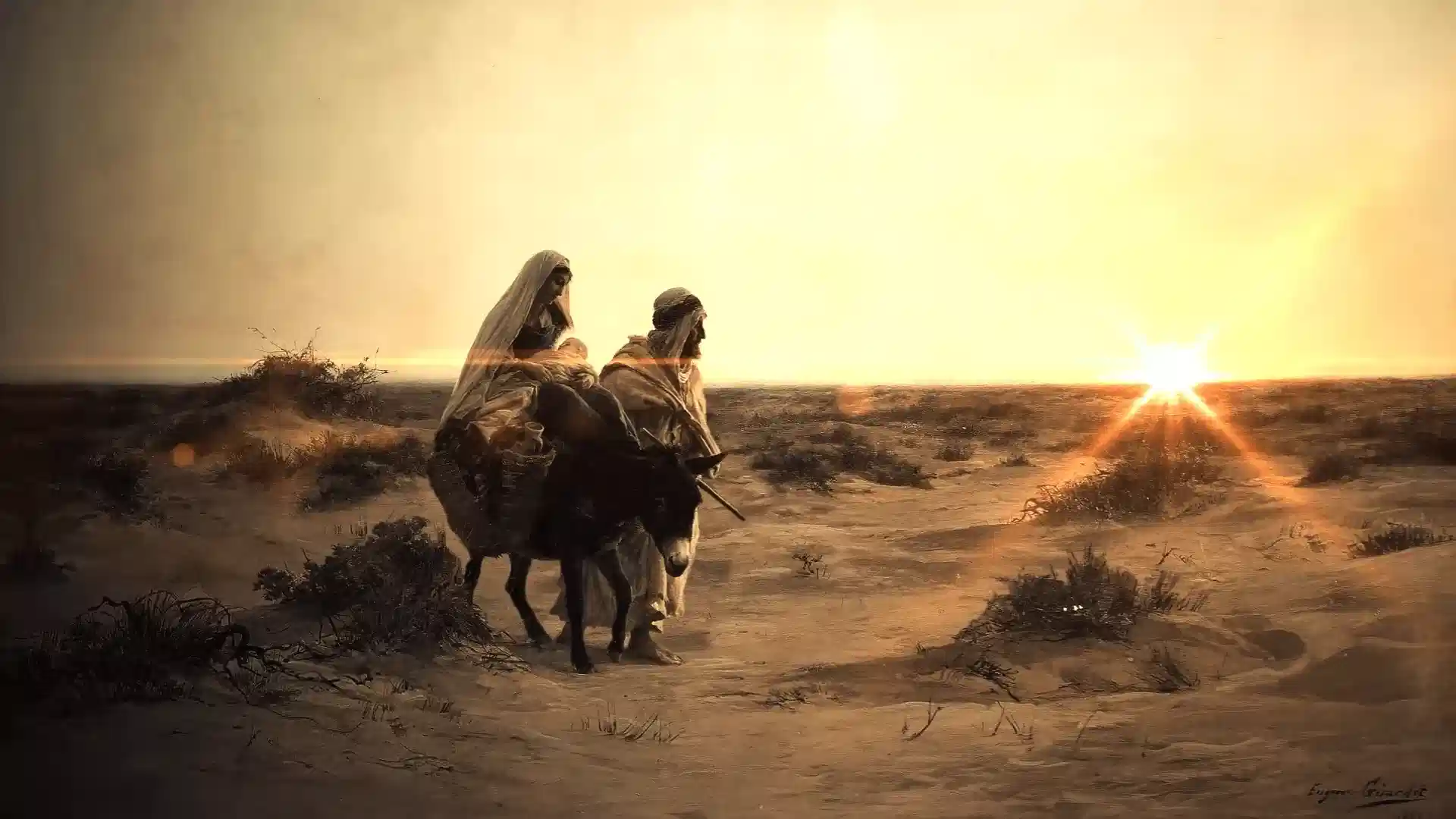
During their time in Egypt, the Holy Family is believed to have traveled through several locations, each rich in religious and historical significance. The following sites are commonly associated with the Holy Family’s sojourn:
3.1 Matariya (Old Cairo)
One of the most significant locations tied to the Holy Family’s journey is Matariya, located in the northeastern part of modern-day Cairo. This area is home to the famous Virgin Mary’s Tree, under which the Holy Family is said to have rested. Pilgrims visit Matariya to honor this sacred site, which marks a moment of peace and protection in the family’s tumultuous journey.
3.2 Wadi El Natron
Another key location is Wadi El Natron, a valley north of Cairo known for its salt lakes and rich monastic history. This site has been a center of Christian monasticism since the 4th century and is believed to have been one of the places where the Holy Family found refuge.
3.3 Tel Basta & Mostorod
In Tel Basta, Jesus is said to have performed a miracle, causing idols to fall upon His arrival. Similarly, in Mostorod, the Holy Family is believed to have created another spring of water, which is now considered a sacred site. Both Tel Basta and Mostorod are significant in Christian tradition, attracting pilgrims who trace the Holy Family’s steps.
3.4 Other Miracle Sites: Sakha, Samanoud, and Belbeis
Other locations associated with the miracles of Jesus during His time in Egypt include:
- Sakha: Known for the footprint of Jesus, which is preserved in a church.
- Samanoud: Where Jesus performed miracles, such as creating water sources.
- Belbeis: Home to the Virgin Mary’s Tree, another significant religious landmark.
These sites continue to be visited by pilgrims who seek to connect with the miracles attributed to Jesus during His early years.
4. The Spiritual and Symbolic Significance of Egypt
The Holy Family’s time in Egypt is not just a historical event; it also holds deep spiritual and symbolic significance in Christianity.
4.1 Egypt as a Place of Refuge
Egypt played a crucial role in providing refuge for the Holy Family. Just as Egypt had historically provided safety to the Israelites during the famine in the time of Joseph (Genesis 45:7), it became a place of divine protection for Jesus, Mary, and Joseph. This parallels the theme of divine intervention and God’s protection in times of danger.
4.2 Fulfillment of Prophecy
The journey of the Holy Family to Egypt also serves as the fulfillment of prophecy. In Hosea 11:1, it is written: “Out of Egypt I called my son.” This verse, originally referring to the Israelites’ exodus from Egypt, is seen as a foreshadowing of Jesus’ journey to Egypt and his eventual return.
4.3 A Land of Miracles
Jesus’ time in Egypt is marked by numerous miracles, which further emphasize Egypt’s significance in Christian theology. Some of the most notable miracles include:
- Creation of springs: Jesus is believed to have created several springs of water during His time in Egypt, symbolizing spiritual renewal and blessing.
- Blessing of trees: The Mariamiah tree, associated with the Virgin Mary, is particularly significant in Coptic tradition. The tree is believed to have grown at a site where Mary washed Jesus’ clothes, further solidifying Egypt’s role as a place of spiritual blessing.
5. The Holy Family’s Return to Israel
After Herod’s death, the angel appeared to Joseph once again, instructing him to return to Israel (Matthew 2:19-20). However, upon hearing that Herod’s son, Herod Archelaus, had succeeded his father as ruler, Joseph feared for their safety. The family ultimately settled in Nazareth in the region of Galilee, fulfilling the prophecy that Jesus would be called a Nazarene (Matthew 2:23).
5.1 The Journey Back
The return to Israel would have been a difficult journey. The Holy Family likely traveled through the Sinai Desert back to Israel, a journey that could have taken several weeks, especially with a young child. This marks the end of their time in Egypt.
6. The Holy Family Path: Modern Pilgrimages
Today, Egypt celebrates the Holy Family Path, a pilgrimage route that traces the journey of Mary, Joseph, and Jesus during their time in Egypt. This route includes numerous historical and spiritual sites, allowing pilgrims to visit the places where the Holy Family is believed to have traveled and resided. Key locations include:
- The Virgin Mary’s Tree in Matariya
- The Monastery of St. Bishoy in Wadi El Natron
- The Church of Abu Serga in Old Cairo
These locations serve as reminders of the divine protection and miracles experienced by the Holy Family during their time in Egypt.
faqs
1. Why did the Holy Family go to Egypt?
- The Holy Family fled to Egypt to escape King Herod’s wrath, who ordered the massacre of all male infants in Bethlehem. An angel appeared to Joseph in a dream and instructed him to take Mary and Jesus to Egypt for their safety.
2. How long did Mary and Joseph stay in Egypt?
- The Bible does not specify the exact duration of their stay, but it is traditionally believed that they stayed for two to three years. This is based on the Gospel of Matthew, which states they remained in Egypt until the death of King Herod.
3. How old was Jesus when they fled to Egypt?
- Based on the Gospel of Matthew, Jesus was likely around two years old when the family fled to Egypt, as King Herod ordered the death of all male children under the age of two.
4. How many days did it take Mary and Joseph to travel from Bethlehem to Egypt?
- The journey likely took several weeks. If they traveled overland, they would have followed trade routes from Bethlehem to Jerusalem, then to Jaffa, and finally to Alexandria. Alternatively, they may have traveled by sea, which would have taken less than two days.
5. Where did Jesus live in Egypt?
- The Holy Family’s time in Egypt was marked by frequent movement. They traveled to various locations, including Matariya, Wadi El Natron, Tel Basta, Mostorod, Belbeis, Samanoud, and Sakha, each of which holds significant religious importance.
6. What miracles happened in Egypt during the time of the Holy Family?
- During their stay in Egypt, several miracles were attributed to Jesus, including the creation of springs of water in places like Mostorod and Tel Basta, and the imprint of Jesus’ footprint in Sakha.
7. What is the significance of Egypt in the Bible?
- Egypt holds great significance in both the Old and New Testaments. It served as a place of refuge for the Israelites during the famine and was also a sanctuary for Jesus and his family from King Herod’s persecution.
8. Where can I visit the sites related to the Holy Family in Egypt?
- Key pilgrimage sites along the Holy Family’s path include the Virgin Mary’s Tree in Matariya, the Monastery of St. Bishoy in Wadi El Natron, and the Church of Abu Serga in Old Cairo, where the Holy Family sought refuge.
9. What is the spiritual significance of Jesus’ time in Egypt?
- Jesus’ time in Egypt is seen as the fulfillment of the prophecy in Hosea 11:1, “Out of Egypt I called my son.” It highlights God’s divine protection and the symbolic connection between Egypt and Jesus’ mission.
10. Is there a pilgrimage route for the Holy Family in Egypt?
- Yes, Egypt has officially designated the “Holy Family Path” as a pilgrimage route. Pilgrims can visit significant sites associated with the Holy Family’s time in Egypt, retracing their steps and connecting with their spiritual legacy.
11. When did the Holy Family return from Egypt?
- After the death of King Herod, the Holy Family returned to Israel, likely around 4-2 BC. However, fearing Herod Archelaus, they settled in Nazareth, fulfilling the prophecy that Jesus would be called a Nazarene.
12. What is the significance of the Virgin Mary’s Tree in Egypt?
- The Virgin Mary’s Tree in Matariya is an important spiritual site for Coptic Christians. It is believed that the Holy Family rested under this tree during their time in Egypt.
13. What miracles are associated with the Virgin Mary during the Holy Family’s time in Egypt?
- The Virgin Mary is said to have performed various miracles during the Holy Family’s time in Egypt, including the growth of fragrant balsam trees and the creation of springs, marking her deep connection to Egypt in Christian tradition.
14. Are there pilgrimage routes for the sacred sites in Egypt?
- Yes, visitors can follow the Holy Family’s path in Egypt, visiting significant sites like the Virgin Mary’s Tree in Matariya and the Monastery of St. Bishoy in Wadi El Natron, deepening their spiritual connection.
15. What were the main stops for the Holy Family during their time in Egypt?
- The Holy Family visited several key locations, including Matariya (Virgin Mary’s Tree), Wadi El Natron (Monasticism center), and Sakha (Jesus’ footprint). They also spent time in places like Mostorod, Tel Basta, and Samanoud.
7. Conclusion
So, how many years did Jesus stay in Egypt? While the exact duration of the Holy Family’s stay is not explicitly mentioned in the Bible, it is widely believed that they spent about three to four years in Egypt. This period of refuge and survival was marked by miraculous events and divine protection. The Holy Family’s time in Egypt symbolizes not only the fulfillment of Old Testament prophecies but also the deep spiritual connection between Jesus and the land of Egypt.
Today, Egypt remains a significant pilgrimage destination for Christians around the world, allowing them to retrace the steps of the Holy Family and connect with the history, spirituality, and miracles associated with Jesus’ early life. The journey to Egypt represents God’s protection and faithfulness, providing hope and inspiration for generations to come.
 English
  German
  French
  Polish
  Russian
  Czech
Czech  Spanish
  Romanian
  Turkish
  Italian
  Hungarian
0 Comment