

The Grand Egyptian Museum: A Gateway to 7,000 Years of Civilization
Few cultural projects in the modern world have generated as much excitement as the Grand Egyptian Museum. Rising on the edge of the desert plateau near the legendary Giza Pyramids, this monumental institution represents far more than a museum—it is a gateway into more than five thousand years of Egyptian civilization.

Cairo 2026 – The Ultimate Tourist Guide to Egypt’s Capital
For decades, visitors from around the world traveled to Cairo to see ancient treasures displayed in crowded galleries of older museums. While those institutions remain historically important, Egypt needed a new home capable of presenting its heritage on a scale worthy of one of humanity’s greatest civilizations. The result is the Grand Egyptian Museum, often called simply “GEM,” a project that has taken years of planning, international collaboration, and visionary design.
Today, the museum stands as the largest archaeological museum in the world dedicated to a single civilization. With vast galleries, cutting-edge conservation laboratories, and breathtaking architecture that frames the pyramids themselves, the museum offers visitors an experience unlike any other cultural attraction on earth.
Whether you are a passionate history enthusiast, a traveler exploring Cairo for the first time, or simply someone fascinated by ancient cultures, visiting the Grand Egyptian Museum is an unforgettable journey. This comprehensive guide will explain everything you need to know—from the museum’s origins and architecture to its most spectacular treasures and practical visitor tips.
1. What Is the Grand Egyptian Museum?
The Grand Egyptian Museum (GEM) is an enormous cultural complex dedicated entirely to the history, art, and archaeology of ancient Egypt. Located just a short distance from the pyramids, the museum was designed to become the central hub for Egyptian heritage.
Unlike traditional museums that present artifacts from many different civilizations, the GEM focuses on a single culture: ancient Egypt. This specialization allows the museum to display its collections in extraordinary depth, guiding visitors through the development of Egyptian civilization across thousands of years.
The museum complex covers over 500,000 square meters, making it one of the largest museum facilities ever constructed. Inside, visitors can explore galleries that house more than 100,000 artifacts, including statues, jewelry, papyri, sarcophagi, and monumental sculptures that once decorated temples and royal tombs.
Many of these objects were previously stored in museum warehouses or scattered across different institutions. The GEM finally provides enough space to display them properly, allowing visitors to experience Egyptian history in a more complete and immersive way.
Its location near the pyramids is also symbolic. Ancient Egypt’s most iconic monuments rise just beyond the museum’s walls, creating a powerful connection between the artifacts inside and the landscapes where they were originally created.
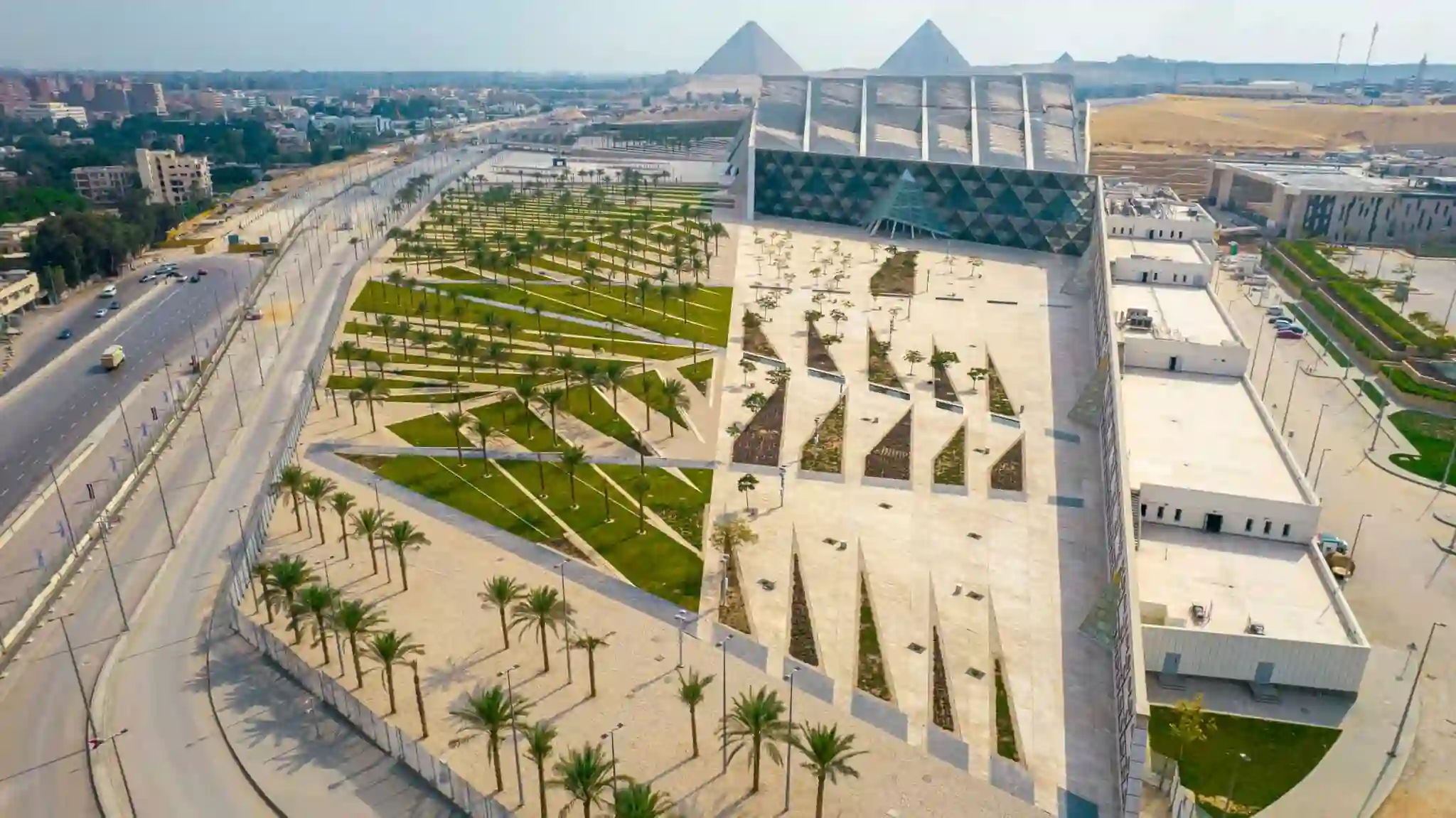
2. The Vision Behind the Grand Egyptian Museum
The idea for the Grand Egyptian Museum emerged from a simple but ambitious vision: Egypt needed a modern museum capable of showcasing its unparalleled heritage to the world.
For more than a century, many artifacts had been housed in the historic Egyptian Museum, located in Cairo’s Tahrir Square. Although beloved by generations of visitors, that museum eventually became overcrowded, with limited space for exhibitions and conservation work.
Egyptian authorities therefore launched an international project to build a new museum that could present the country’s archaeological treasures on a global stage. An international architectural competition was organized, attracting hundreds of proposals from around the world.
The winning design came from Heneghan Peng Architects, whose concept combined modern architecture with geometric forms inspired by ancient Egyptian design.
Their vision was not simply to construct another museum building, but to create a cultural landscape that integrates architecture, history, and the surrounding desert environment.
The result is a structure that feels both contemporary and timeless—an architectural tribute to the civilization whose legacy it preserves.
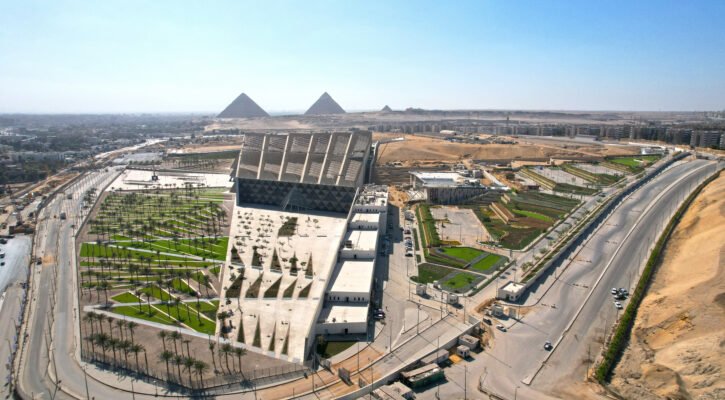
3. Where Is the Grand Egyptian Museum Located?
The museum is located on the western edge of Cairo, just outside the city’s urban core and only a few kilometers from the pyramids.
Its position places it between the modern metropolis of Cairo and the desert plateau of Giza. From certain areas inside the museum, visitors can enjoy direct views of the Great Pyramid, creating one of the most dramatic museum settings anywhere in the world.
Geographically, this location also reflects Egypt’s ancient relationship with the Nile Valley. For thousands of years, Egyptian civilization flourished along the fertile banks of the Nile, while the deserts beyond served as sacred landscapes for tombs and monuments.
By placing the museum at this symbolic boundary between city and desert, the designers created a powerful connection between Egypt’s past and present.

4. Architecture and Design of the GEM
The architecture of the Grand Egyptian Museum is itself a masterpiece. Designed to harmonize with its surroundings, the building incorporates geometric patterns inspired by the triangular form of the pyramids.
The exterior façade features panels of translucent stone and glass that reflect sunlight in different ways throughout the day. From a distance, the museum appears almost like a modern extension of the desert landscape.
Inside, enormous open spaces allow natural light to fill the galleries. Large windows frame views of the pyramids, reminding visitors that the objects they are seeing were created by the same civilization that built those legendary monuments.
The design also incorporates advanced environmental technology to protect delicate artifacts from heat, humidity, and light damage—an essential feature for preserving ancient materials such as wood, papyrus, and textiles.
5. The Monumental Entrance and Grand Staircase
One of the most striking moments of any visit occurs immediately upon entering the museum.
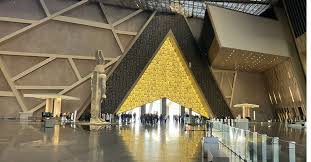
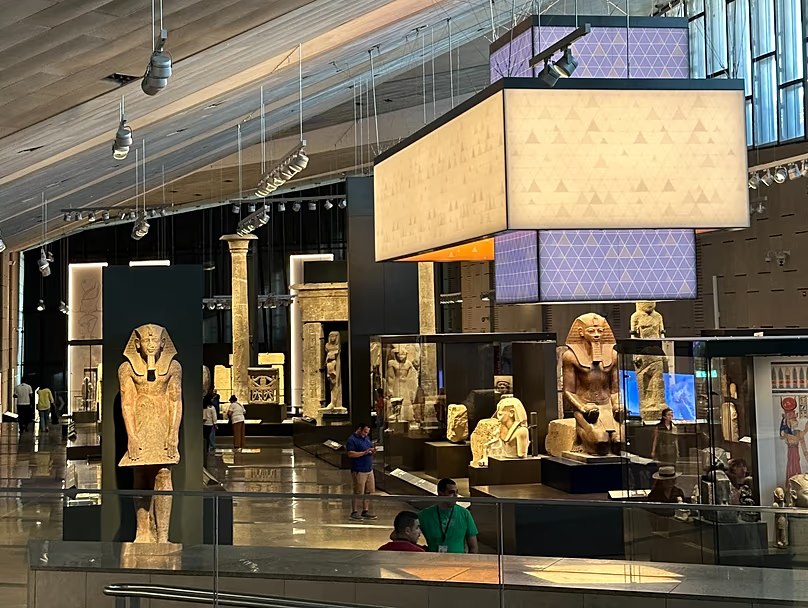
Visitors arrive in a vast atrium dominated by a colossal statue of Ramesses II, one of the most powerful rulers of ancient Egypt. This towering sculpture greets visitors like a royal guardian welcoming them into the world of the pharaohs.
Beyond the statue lies the museum’s Grand Staircase, an enormous architectural feature lined with statues of kings, queens, and deities. As visitors ascend the staircase, they pass through centuries of Egyptian history while approaching galleries that explore different historical periods.
At the top of the staircase, panoramic windows reveal the pyramids on the horizon—a moment that perfectly connects Egypt’s ancient monuments with its modern museum.
6. What You Will See Inside the Museum
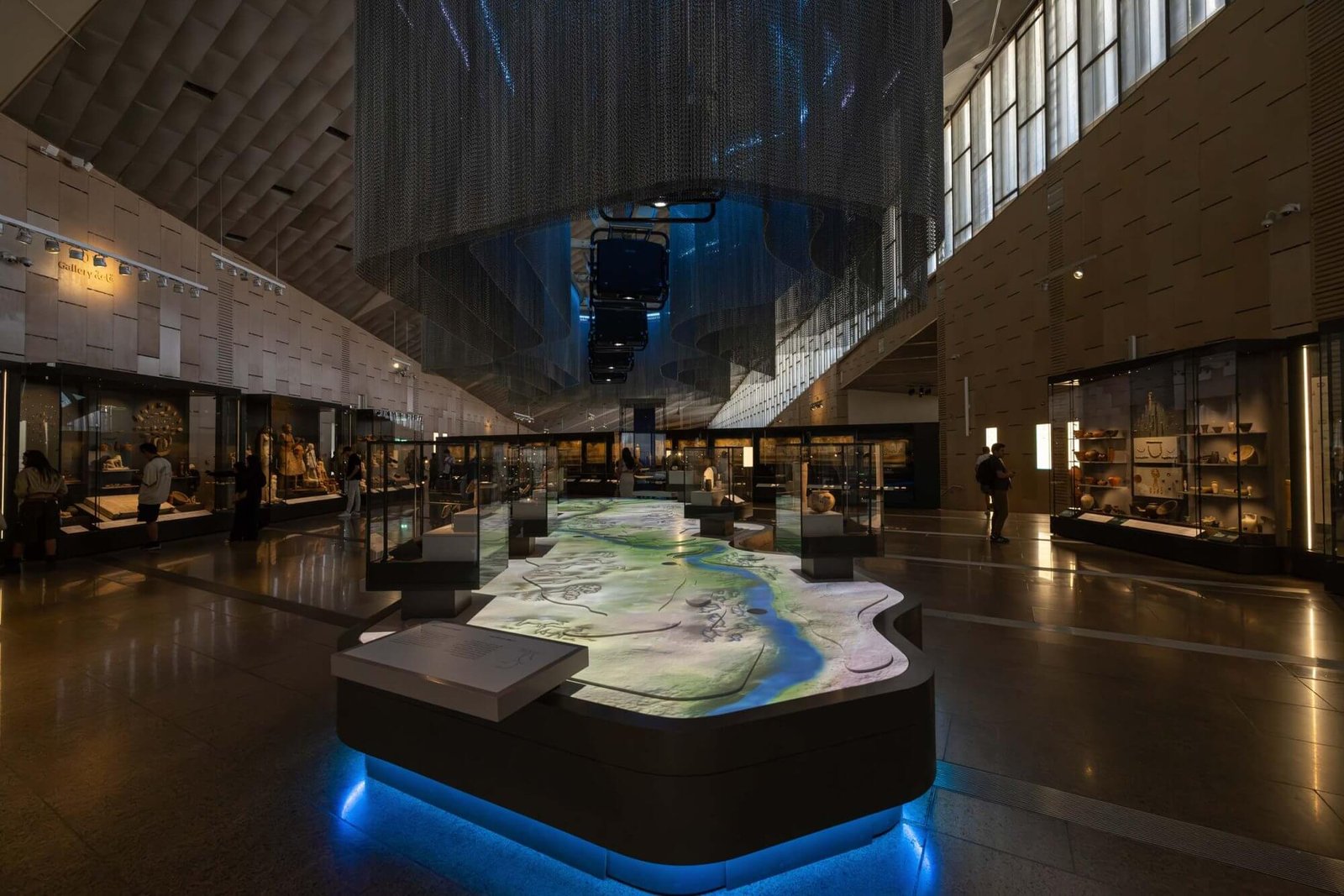
Inside the Grand Egyptian Museum, visitors encounter one of the richest collections of ancient artifacts ever assembled.
The museum’s galleries present a chronological journey through Egyptian history, beginning with prehistoric cultures and continuing through the great dynasties of the pharaohs.
Exhibits include:
- Monumental statues from temples
- Intricately decorated coffins
- Jewelry crafted from gold and precious stones
- Papyrus scrolls containing ancient texts
- Everyday objects used by ordinary Egyptians
This diversity reveals that ancient Egypt was not only a land of kings and pyramids but also a complex society with artists, farmers, priests, and craftsmen.
7. The Tutankhamun Galleries – The Crown Jewel of the Museum
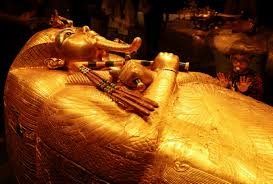
Perhaps the most anticipated feature of the museum is its extraordinary exhibition dedicated to Tutankhamun.
The young king’s tomb was discovered in 1922 by archaeologist Howard Carter, revealing thousands of objects that had remained untouched for more than three thousand years.
For the first time ever, the entire collection—more than 3,500 artifacts—is displayed together in one place.
Visitors can see:
- The famous golden funerary mask
- Elaborate chariots
- Furniture from the royal palace
- Jewelry and ceremonial weapons
- Personal items used by the young king
Together, these objects provide an intimate glimpse into the life and burial rituals of one of Egypt’s most famous rulers.
8. The Khufu Solar Boat Museum
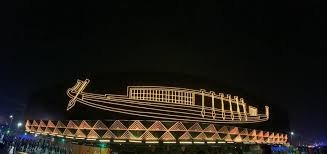
Another remarkable highlight is the display of the solar boat belonging to Khufu, the ruler who built the Great Pyramid.
This wooden ship was discovered buried near the pyramid in 1954. Carefully dismantled in ancient times and hidden within a sealed pit, the boat remained preserved for more than four thousand years.
Archaeologists painstakingly reconstructed the vessel from over a thousand wooden pieces, revealing a beautifully crafted ship measuring more than forty meters in length.
The boat is believed to have had a symbolic function, carrying the king’s spirit on its journey with the sun god through the afterlife.
9. The Main Historical Galleries
The museum’s galleries guide visitors through the evolution of Egyptian civilization.
Major historical periods include:
Prehistoric Egypt
Early communities that developed agriculture and the first artistic traditions.
Old Kingdom
The era when pyramids were constructed and centralized royal power flourished.
Middle Kingdom
A period of political stability and artistic innovation.
New Kingdom
The golden age of empire, including famous pharaohs such as Ramesses II and Tutankhamun.
Late Period and Greco-Roman Egypt
An era of cultural interaction between Egyptian traditions and Mediterranean influences.
10. Interactive Exhibitions and Modern Technology
Unlike traditional museums, the GEM integrates advanced digital technology into its exhibitions.
Visitors can explore interactive displays that reconstruct ancient temples, visualize how statues originally appeared with bright colors, and learn about archaeological discoveries through multimedia presentations.
These technologies help transform ancient artifacts into living stories, making the museum engaging for visitors of all ages.
11. Conservation and Restoration Center
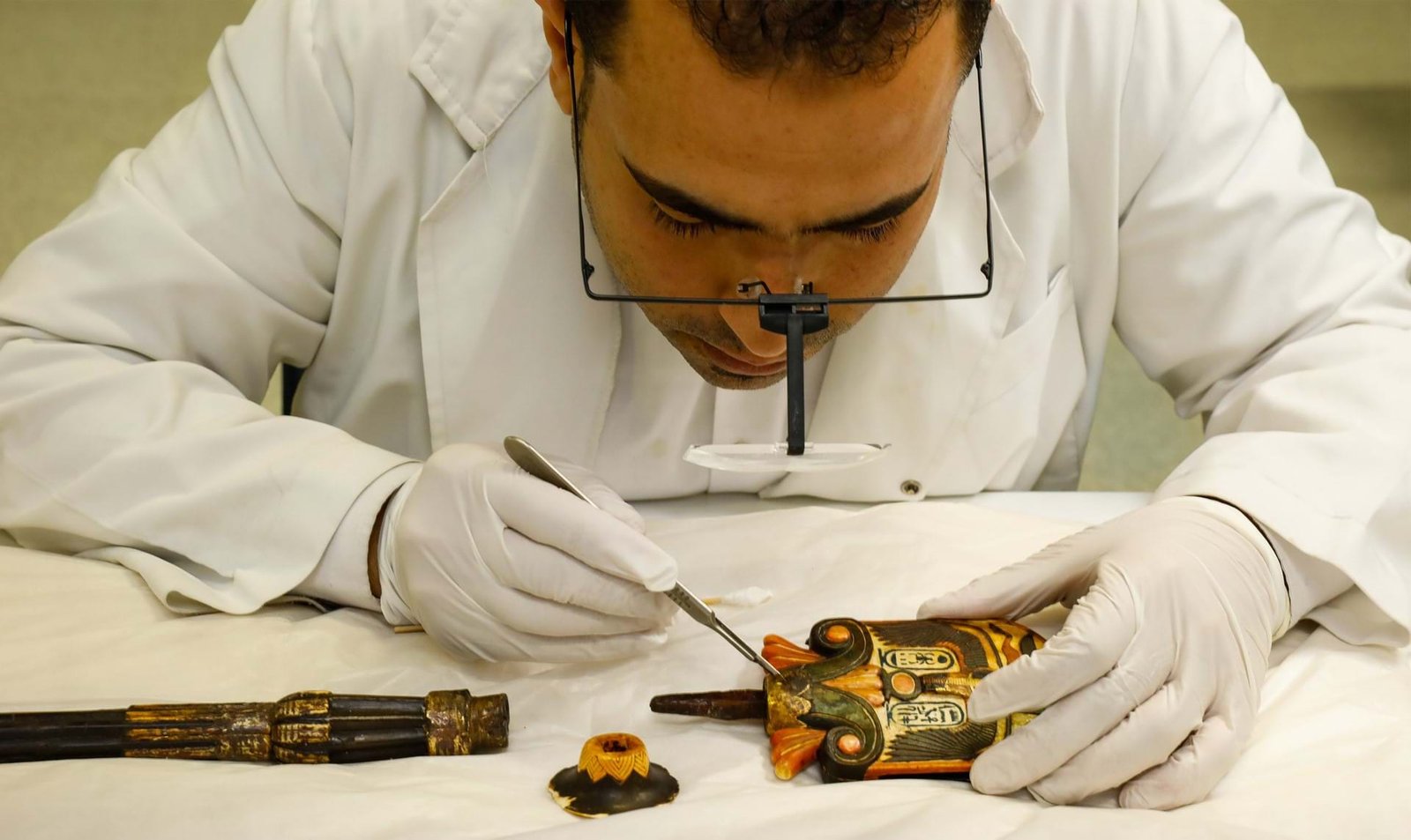
Behind the scenes, the museum houses one of the most advanced conservation facilities in the region.
Specialized laboratories allow experts to study and restore fragile artifacts using modern scientific techniques. Thousands of objects have already undergone careful conservation work before being displayed to the public.
This center ensures that Egypt’s cultural heritage will be preserved for future generations.
12. How to Get to the Grand Egyptian Museum
Visitors can reach the museum easily from Cairo using several transportation options:
- Taxi or ride-hailing services
- Organized tour buses
- Private transportation arranged by hotels
In the future, expanded transportation networks may make access even easier for international travelers.

13. Ticket Prices and Booking
Ticket prices vary depending on visitor categories, including local residents, international tourists, and students.
To avoid long queues, many travelers prefer to book tickets online in advance or visit as part of a guided tour that includes transportation and professional commentary.

14. Opening Hours of the Museum
Opening hours may vary depending on season and special events, but the museum generally welcomes visitors throughout the day.
Evening hours occasionally allow travelers to explore the museum at sunset, when views of the pyramids become especially dramatic.
15. How Much Time Do You Need to Visit GEM?
Because the museum is so large, visitors should plan enough time to explore its galleries comfortably.
Typical visits range from:
- 3 hours for a quick overview
- Half a day for a relaxed experience
- A full day for serious history enthusiasts
16. Restaurants, Cafes and Shopping
The museum complex includes several restaurants and cafés where visitors can relax during their visit.
Gift shops offer books, replicas of ancient artifacts, and locally crafted souvenirs inspired by Egyptian art.
17. Facilities and Services for Visitors
Modern visitor facilities include:
- Information desks
- ATMs
- Secure lockers
- Charging stations for mobile devices
- First-aid services
These amenities ensure that visitors can enjoy their experience comfortably.

18. Photography Rules in the Museum
Photography is generally permitted inside the museum, though certain restrictions apply.
Flash photography may be prohibited near delicate artifacts, and some special exhibitions may have additional guidelines.
19. Accessibility and Visitor Comfort
The museum has been designed to accommodate all visitors, including those with mobility challenges.
Wide pathways, elevators, and accessible entrances make it possible for everyone to explore the galleries with ease.
20. Tips for Visiting the Grand Egyptian Museum
To make the most of your visit:
- Arrive early to avoid crowds
- Wear comfortable shoes for walking
- Combine your visit with a trip to the nearby pyramids
- Consider joining a guided tour to understand the historical context of the artifacts
Conclusion
The Grand Egyptian Museum is more than just a museum—it is a monumental tribute to one of humanity’s most influential civilizations.
By bringing together thousands of artifacts in a spectacular architectural setting beside the Giza Pyramids, the museum offers visitors a journey through thousands of years of history.
For travelers exploring Egypt, visiting the GEM is not simply another attraction. It is an opportunity to experience the story of ancient Egypt in a way that has never been possible before.
Whether you are fascinated by pharaohs, curious about archaeological discoveries, or simply seeking a deeper understanding of human history, the Grand Egyptian Museum deserves a place at the very top of your travel list.
FAQ – Grand Egyptian Museum (100 Questions & Answers)
General Questions About the Grand Egyptian Museum
1. What is the Grand Egyptian Museum?
The Grand Egyptian Museum (GEM) is the largest archaeological museum in the world dedicated to a single civilization. Located in Giza near the pyramids, the museum houses more than 100,000 ancient Egyptian artifacts, including the complete treasure collection of King Tutankhamun. It is designed to become the main global center for ancient Egyptian heritage.
2. Where is the Grand Egyptian Museum located?
The Grand Egyptian Museum is located in Giza, Egypt, about 2 kilometers from the Pyramids of Giza. It sits on the edge of the Giza Plateau, overlooking the pyramids and connecting modern Cairo with one of the most important archaeological landscapes in the world.
3. Why is the Grand Egyptian Museum important?
The museum is important because it represents the largest museum project ever dedicated to ancient Egyptian civilization. It brings together thousands of artifacts from across Egypt and presents them using modern technology, making it one of the most significant cultural institutions of the 21st century.
4. How big is the Grand Egyptian Museum?
The Grand Egyptian Museum covers approximately 500,000 square meters, making it the largest archaeological museum in the world. The exhibition galleries alone span tens of thousands of square meters and are designed to display more than 100,000 artifacts from ancient Egypt.
5. Is the Grand Egyptian Museum the biggest museum in the world?
It is the largest museum dedicated to a single civilization. While other museums like the Louvre are larger overall, the Grand Egyptian Museum is the biggest museum entirely devoted to ancient Egyptian history and archaeology.
6. What does GEM stand for?
GEM stands for Grand Egyptian Museum. It is commonly used in international media and tourism marketing to refer to the museum located near the Pyramids of Giza.
7. How many artifacts are in the Grand Egyptian Museum?
The museum houses more than 100,000 artifacts from ancient Egyptian history. Many of these objects were previously stored in warehouses and are being displayed to the public for the first time.
8. What makes the Grand Egyptian Museum unique?
The museum is unique because it displays the entire collection of Tutankhamun’s treasures together for the first time, includes advanced digital exhibitions, and is located only minutes from the pyramids, creating a direct connection between the museum and the ancient monuments.
9. What civilization does the museum focus on?
The museum focuses entirely on ancient Egyptian civilization, covering more than 5,000 years of history from prehistoric times through the Greco-Roman period.
10. Is the Grand Egyptian Museum worth visiting?
Yes, the Grand Egyptian Museum is considered one of the most important attractions in Egypt and a must-visit destination for anyone interested in history, archaeology, or ancient civilizations.
Opening Date & Construction Questions
11. When did the Grand Egyptian Museum open?
The Grand Egyptian Museum has gradually opened sections to visitors while preparing for its full official opening. The museum has hosted trial openings and special events before the complete inauguration.
12. When is the official opening of the Grand Egyptian Museum?
The official opening of the Grand Egyptian Museum is expected to be a major global event attended by international leaders, archaeologists, and cultural figures.
13. When did construction of the museum begin?
Construction began in 2012 after years of planning and international design competitions.
14. How long did it take to build the museum?
Building the museum took more than a decade due to its massive size, advanced technology, and the complexity of transporting and preserving ancient artifacts.
15. How much did the Grand Egyptian Museum cost to build?
The estimated cost of building the Grand Egyptian Museum is more than 1 billion US dollars, making it one of the most expensive museum projects ever undertaken.
16. Who financed the Grand Egyptian Museum?
The project was funded by the Egyptian government with additional financial support from international partners including loans from Japan.
17. Why was the museum built?
The museum was built to provide a modern space capable of displaying Egypt’s vast archaeological treasures, many of which could not be shown in older museums due to space limitations.
18. Why did the museum take so long to open?
The project involved massive construction, artifact restoration, and transportation of fragile ancient objects, which required time and specialized expertise.
19. When will the museum be fully open?
The full opening is expected after the completion of all galleries and visitor facilities.
20. Has the Grand Egyptian Museum officially opened yet?
Parts of the museum have been opened for preview visits while the final inauguration continues to be prepared.
Architecture & Design
21. Who designed the Grand Egyptian Museum?
The museum was designed by the Irish architectural firm Heneghan Peng Architects, which won an international design competition involving hundreds of proposals.
22. What inspired the museum’s architecture?
The architecture was inspired by the geometry of the pyramids and the desert landscape surrounding Giza.
23. What materials were used in the museum’s construction?
The building uses glass, stone, and alabaster panels to create a structure that reflects sunlight and blends with the desert environment.
24. What is the Grand Staircase?
The Grand Staircase is one of the most impressive architectural features of the museum, displaying monumental statues of ancient Egyptian kings and gods.
25. What statue greets visitors at the entrance?
Visitors are welcomed by the colossal statue of Pharaoh Ramses II, one of the most famous rulers of ancient Egypt.
Exhibits & Collections
26. What can you see inside the Grand Egyptian Museum?
Visitors can see statues, jewelry, sarcophagi, papyrus scrolls, royal artifacts, and thousands of objects representing different periods of Egyptian history.
27. Does the museum display Tutankhamun’s treasure?
Yes, the museum displays the complete collection of King Tutankhamun’s treasures, including many items never shown before.
28. How many Tutankhamun artifacts are displayed?
More than 3,500 artifacts from Tutankhamun’s tomb will be displayed together for the first time.
29. Are there mummies in the museum?
Some mummies and burial objects are displayed as part of the exhibitions focusing on ancient Egyptian funerary traditions.
30. What is the Khufu Solar Boat?
The Khufu Solar Boat is an ancient wooden boat discovered near the Great Pyramid of Giza and carefully reconstructed for display in the museum.
Visiting the Museum
31. Can tourists visit the Grand Egyptian Museum?
Yes, tourists can visit the museum and explore many of its galleries and exhibitions.
32. How much are tickets to the Grand Egyptian Museum?
Ticket prices vary depending on nationality, age group, and whether visitors purchase guided tours.
33. Can you buy tickets online?
Yes, tickets can often be purchased online through official booking systems.
34. How long does it take to visit the museum?
Most visitors spend between three and five hours exploring the museum.
35. What are the opening hours?
Opening hours vary depending on the season and special events.
Transportation & Location
36. How far is the museum from Cairo?
The museum is about 15 kilometers from downtown Cairo.
37. How far is it from the pyramids?
The museum is only about 2 kilometers from the Giza pyramids.
38. How can you reach the museum?
Visitors can reach the museum by taxi, private car, tour bus, or ride-sharing services.
39. Is there public transport to GEM?
Future transportation projects are expected to connect the museum with Cairo’s metro system.
40. Are there hotels near the Grand Egyptian Museum?
Yes, several hotels and resorts are located close to the museum and the pyramids.
Visitor Experience
41. Are guided tours available?
Yes, guided tours are available in multiple languages.
42. Is photography allowed in the museum?
Photography is generally allowed but flash photography may be restricted.
43. Are there restaurants inside the museum?
Yes, the museum includes restaurants and cafés with views of the pyramids.
44. Is the museum family-friendly?
Yes, the museum is designed for visitors of all ages, including families with children.
45. Are there gift shops?
Yes, the museum has gift shops selling books, souvenirs, and replicas of ancient artifacts.
Technology & Innovation
46. Does the museum use digital technology?
Yes, the museum uses interactive displays, digital reconstructions, and multimedia presentations.
47. Are there virtual tours of the museum?
Some virtual tours and digital experiences are available online.
48. Does the museum have an audio guide?
Visitors can often use audio guides to learn more about the exhibits.
49. Are interactive exhibitions available?
Yes, interactive exhibitions help visitors understand ancient Egyptian life and culture.
50. Is there educational content for students?
The museum provides educational programs for schools and universities.
Historical Context
51. Why are Egyptian artifacts so important?
They provide insight into one of the oldest and most influential civilizations in human history.
52. What periods of Egyptian history are displayed?
The museum displays artifacts from prehistoric times to the Greco-Roman period.
53. What is the Old Kingdom?
The Old Kingdom was the period when the pyramids were built.
54. What is the New Kingdom?
The New Kingdom was the golden age of ancient Egypt, when rulers like Tutankhamun and Ramses II lived.
55. What is the Late Period?
The Late Period represents the final centuries of independent Egyptian rule.
Visitor Tips
56. What is the best time to visit the museum?
Morning visits are often the best time to avoid crowds.
57. Should you visit the pyramids and the museum on the same day?
Many visitors combine both attractions in one day.
58. Is the museum air-conditioned?
Yes, the museum is fully climate-controlled.
59. Are wheelchairs available?
Wheelchair accessibility is provided for visitors with mobility needs.
60. Is there parking at the museum?
Yes, there are large parking areas for visitors.
More Detailed Questions
61. How many galleries are in the museum?
The museum contains multiple large galleries covering thousands of years of history.
62. What is the Grand Atrium?
The Grand Atrium is the central hall where visitors first enter the museum.
63. Is the museum bigger than the Egyptian Museum in Cairo?
Yes, it is significantly larger than the historic Egyptian Museum in Tahrir Square.
64. Will artifacts be moved from the old museum?
Many artifacts have already been transferred from the Egyptian Museum in Cairo.
65. Are there outdoor gardens?
Yes, the museum includes landscaped gardens and open spaces.
66. Does the museum host events?
The museum hosts cultural events, exhibitions, and conferences.
67. Can you see the pyramids from the museum?
Yes, some areas offer stunning views of the Giza pyramids.
68. How many visitors is the museum expected to receive?
Millions of visitors are expected annually.
69. Is the museum suitable for children?
Yes, interactive displays make it engaging for younger visitors.
70. Are there rest areas inside?
Yes, seating areas are available throughout the museum.
Tourism & Planning
71. Is the museum included in Egypt tours?
Many travel companies include it in Cairo itineraries.
72. Do travel agencies offer GEM tours?
Yes, many agencies offer guided museum tours.
73. Can you book private tours?
Private guided tours are available.
74. How early should you arrive?
Arriving early allows more time to explore.
75. Is the museum crowded?
Crowds depend on season and time of day.
Cultural Significance
76. Why is Tutankhamun famous?
His tomb was discovered almost intact in 1922.
77. What is the significance of the solar boat?
It symbolizes the journey of the pharaoh in the afterlife.
78. Why were pyramids built?
They were royal tombs for Egyptian kings.
79. What is the role of archaeology in Egypt?
Archaeology helps uncover and preserve ancient history.
80. Why is Egypt important for world history?
Ancient Egypt contributed to architecture, writing, and science.
Practical Questions
81. Is Wi-Fi available at the museum?
Some areas may provide Wi-Fi access.
82. Are lockers available?
Yes, lockers are provided for visitor convenience.
83. Can you bring bags inside?
Security checks are required for bags.
84. Are food and drinks allowed?
Outside food may be restricted.
85. Is there medical assistance available?
A medical clinic is available for emergencies.
Final Questions
86. Is the museum safe to visit?
Yes, the museum follows international safety standards.
87. What languages are supported in the museum?
Explanations are provided in several languages.
88. Can researchers access the museum collections?
Scholars can request research access.
89. Does the museum collaborate internationally?
Yes, it works with museums and institutions worldwide.
90. Will new artifacts be added in the future?
Yes, new discoveries may be displayed.
91. Is the museum part of Egypt’s tourism strategy?
Yes, it is one of the country’s most important tourism projects.
92. Does the museum help preserve heritage?
Yes, conservation labs restore and protect artifacts.
93. Can visitors attend lectures or workshops?
Educational events are sometimes organized.
94. Is there a museum bookstore?
Yes, books about ancient Egypt are available.
95. Are replicas sold in the museum shop?
Yes, visitors can buy high-quality replicas.
96. Can photographers visit professionally?
Professional photography may require permission.
97. Does the museum have gardens?
Yes, landscaped areas surround the museum.
98. Can you see sunset from the museum?
Some viewpoints offer spectacular sunset views over the pyramids.
99. Why should every traveler visit GEM?
It is the most comprehensive museum dedicated to ancient Egypt.
100. What makes the Grand Egyptian Museum a global landmark?
Its scale, location near the pyramids, and unmatched collection of artifacts make it one of the most important museums ever built
🌍 Discover Egypt’s legacy. Rediscover yourself.
Cairo Tour from Hurghada
Cairo Day Trip from Sharm El Sheikh by Bus : Pyramids, Museum & Practical Tips
Private Marsa Alam Excursions To Cairo
Port Ghalib Marsa Alam – Cairo Tour from Port ghalib
Private Cairo and Pyramids Day Trip from El Gouna & Grand Egyptian Museum
Grand Egyptian Museum tour from Hurghada Makadi Bay by Private Car
Day Trip to the Grand Egyptian Museum from Sahl Hasheesh Hurghada by Private Car
Full-Day Hurghada Tour to Cairo from Soma Bay by Bus – Explore Egypt’s Ancient Wonders





























Kommentar (0)