

1. Introduction to Ancient Egyptian Religion
Ancient Egyptian Gods and Goddesses : Ancient Egypt was never just a civilization of pyramids and monuments—it was a world deeply shaped by divine forces. Every sunrise, every flood of the Nile, every birth, and every death was believed to be guided by powerful gods and goddesses.
For more than 3,000 years, the ancient Egyptians built one of the most complex religious systems in human history. Unlike modern belief systems centered around one god, Egyptian religion was rich, diverse, and deeply sAncient Egyptian Gods and Goddessesymbolic.
Each deity represented something essential:
- A force of nature
- A moral principle
- A cosmic function
The sun was not just a star—it was a god.
Death was not an end—it was a journey.
At the heart of everything was one powerful idea:
👉 Balance must be maintained.
This balance was called Ma’at, the universal law that governed truth, justice, and order.
Without it, chaos would consume the world.
Tour from Hurghada to Luxor 2-Day Trip with Hot Air Balloon Ride
Hurghada to Aswan & Abu Simbel Tour – 2 Days
2. The Creation of the Universe & Origins of the Gods
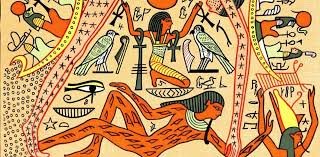
Before creation, there was nothing but endless darkness and water—a cosmic ocean known as Nun.
From this void emerged the first god:
👉 Atum – The Self-Created One
Atum brought existence into being. From him came:
- Shu (air)
- Tefnut (moisture)
- Geb (earth)
- Nut (sky)
Together, they formed the foundation of life.
Different cities told different creation stories:
- In Heliopolis, creation began with Ra
- In Memphis, the god Ptah created the world through thought and speech
- In Thebes, Amun became the supreme hidden force
This diversity reveals something powerful:
👉 Egyptians didn’t search for one truth—they explored many perspectives.
3. The Most Powerful Egyptian Gods and Their Powers
☀️ Ra – The Sun God
The king of all gods.
Ra created life and ruled the sky. Every day, he sailed across the heavens. Every night, he battled darkness in the underworld.
👉 Without Ra, life would not exist.
⚖️ Osiris – God of the Afterlife
The ruler of the dead and symbol of resurrection.
Osiris represents:
- Eternal life
- Judgment
- Rebirth
His story shaped the entire Egyptian belief in the afterlife.
🦅 Horus – God of Kingship
The protector of pharaohs.
He represents:
- Power
- Justice
- Victory over chaos
Every pharaoh was believed to be the living Horus.
🐺 Anubis – Guardian of the Dead
The guide of souls.
Anubis:
- Oversees mummification
- Protects tombs
- Guides souls to judgment
⚡ Seth – God of Chaos
A complex figure.
He represents:
- War
- Storms
- Destruction
But also necessary balance—without chaos, order cannot exist.
🌬️ Amun – The Hidden Power
The invisible force behind creation.
Later combined with Ra to become:
👉 Amun-Ra – King of Gods
4. The Most Important Egyptian Goddesses and Their Roles
👑 Isis – Goddess of Magic and Motherhood
One of the most powerful figures in Egyptian mythology.
She represents:
- Love
- Protection
- Resurrection
🎶 Hathor – Goddess of Joy
The goddess of:
- Music
- Dance
- Happiness
She brought life emotional balance.
🐱 Bastet – Protector of Home
Gentle yet powerful.
She protected:
- Families
- Women
- Children
🦁 Sekhmet – Goddess of War and Healing
Destruction and healing combined.
She could:
- Destroy humanity
- Cure disease
⚖️ Ma’at – Goddess of Truth
The foundation of morality.
She represents:
- Justice
- Balance
- Truth
5. The Role of Gods in Daily Egyptian Life
The gods were not distant—they were part of everyday life.
🌾 Agriculture
The Nile flood = blessing from the gods
Bad harvest = divine warning
🏛️ Temples
Temples were homes of gods, not public places.
Priests performed rituals like:
- Offering food
- Burning incense
- Reciting prayers
👑 The Pharaoh
The living god on Earth.
His mission:
- Maintain order
- Communicate with gods
- Protect Egypt
6. The Afterlife and Judgment of Souls
Death was not feared—it was prepared for.
⚖️ The Weighing of the Heart
After death:
- Anubis weighs the heart
- Thoth records
- Osiris judges
👉 Heart vs Feather of Ma’at
- Light = eternal life
- Heavy = destruction
🌅 The Field of Reeds
A perfect paradise:
- Endless food
- Peaceful life
- Eternal happiness
7. The Greatest Egyptian Myths and Legends
⚔️ The Story of Osiris
Killed by his brother Seth…
Resurrected by Isis…
👉 Birth of Horus
🦅 Horus vs Seth
A legendary battle:
👉 Order vs Chaos
🌙 Ra’s Night Journey
Every night:
- Ra fights darkness
- Defeats the serpent Apophis
👉 Symbol of survival
🔥 Sekhmet’s Rage
Almost destroyed humanity…
Stopped only by trickery.
8. Symbols, Sacred Animals, and Hidden Meanings
☥ Ankh
Symbol of eternal life
👁️ Eye of Horus
Protection and healing
🪶 Feather of Ma’at
Truth and justice
🐞 Scarab
Rebirth and transformation
9. Temples, Cities, and Centers of Worship
Each city had its own god:
- Heliopolis → Ra
- Memphis → Ptah
- Thebes → Amun
- Abydos → Osiris
Temples were massive centers of:
- Religion
- Economy
- Politics
10. Legacy of Egyptian Gods in the Modern World
Even today, Egyptian mythology lives on:
🎬 Movies
- The Mummy
- Gods of Egypt
🎮 Games
- Assassin’s Creed Origins
💎 Culture
- Jewelry
- Tattoos
- Fashion
🔚 Conclusion
Ancient Egyptian gods were never just myths.
They were:
- Explanations of life
- Symbols of truth
- Reflections of human fears and hopes
From Ra’s sun to Osiris’ judgment…
From Isis’ magic to Anubis’ guidance…
These stories still live today because they answer questions we still ask:
👉 What is life?
👉 What happens after death?
Is there justice in the universe?
And perhaps… that is why Egyptian mythology will never fade.
❓ FAQ Ancient Egyptian Gods and Goddesses.
❓ FAQ – How Did Ancient Egyptians Celebrate the Gods?
How did ancient Egyptians celebrate their gods?
Ancient Egyptians celebrated their gods through a rich mix of religious rituals, festivals, and daily practices. These celebrations ranged from grand public events—like temple processions and festivals—to private acts such as prayers and offerings at home. The goal was always the same: to maintain harmony with the divine world and uphold the principle of Ma’at (cosmic balance and truth).
What happened during temple festivals in ancient Egypt?
Temple festivals were the heart of public religious life. During these events, statues of gods like Ra or Amun were placed on sacred boats and carried through the streets.
People gathered in large crowds to pray, sing, and celebrate, believing the god was physically present among them during the procession.
Did Egyptians use music and dance in religious celebrations?
Yes, music and dance were essential parts of worship. Instruments like harps, drums, and sistrums were played, while trained dancers performed sacred movements.
These performances were not just entertainment—they were considered a spiritual offering to gods such as Hathor.
What role did food play in honoring the gods?
Food offerings were a central ritual. Egyptians presented bread, meat, fruits, and beer to the gods multiple times a day.
After the gods symbolically consumed the spiritual essence, the food was shared among priests and people—turning worship into a community feast.
Did ancient Egyptians perform religious plays or stories?
Absolutely. Egyptians reenacted myths through dramatic performances.
One of the most famous stories performed was the death and resurrection of Osiris, which symbolized eternal life and renewal. These plays helped people connect emotionally with their beliefs.
How did ordinary people participate in worship?
Even outside temples, religion was part of daily life. People:
- Prayed every morning to Ra at sunrise
- Wore amulets of gods like Anubis for protection
- Made small offerings at home shrines
This made religion a personal and constant presence in their lives.
Were there pilgrimages in ancient Egypt?
Yes, many Egyptians traveled to major temples such as those dedicated to Isis.
These journeys were seen as acts of devotion and spiritual renewal, similar to pilgrimages in modern religions.
What role did the pharaoh play in religious celebrations?
The pharaoh was considered a living god and the chief representative of the gods on Earth.
He led the most important ceremonies, made offerings, and ensured the gods remained pleased—maintaining stability in the kingdom.
Did celebrations have an economic impact?
Yes, festivals boosted the economy significantly. Markets flourished as vendors sold food, crafts, and religious items.
These events were both spiritual and social gatherings, bringing communities together while supporting trade.
Why were celebrations so important in ancient Egyptian religion?
Celebrations were essential because Egyptians believed the gods controlled everything—life, death, nature, and prosperity.
By honoring them regularly, people ensured protection, good harvests, and a safe journey to the afterlife under gods like Osiris.
❓ Frequently Asked Questions About Ancient Egyptian Gods and Goddesses
❓ How many Egyptian gods were there?
There wasn’t a fixed number of gods in ancient Egypt. Over more than 3,000 years, scholars have identified over 2,000 deities.
However, only a smaller group—roughly 30 to 50 major gods—were widely worshipped across the entire country.
What makes Egyptian religion unique is its flexibility:
- Some gods were local, worshipped in one city only
- Others became national gods when their cities gained power
- Many gods were merged together, creating new forms like Amun-Ra
👉 In short: Egyptian religion wasn’t fixed—it evolved constantly.
❓ Who was the most powerful Egyptian god?
For most of Egyptian history, the most powerful god was Ra, the sun deity and creator.
He was believed to:
- Control the sun and life itself
- Travel across the sky by day and the underworld by night
- Maintain the balance of the universe
Later, during the New Kingdom, his power merged with Amun to form Amun-Ra, the supreme divine force.
👉 Power in Egypt wasn’t always fixed—different gods became dominant depending on the time and politics.
❓ Who was the king of the gods in ancient Egypt?
The title “king of the gods” was most commonly given to Ra.
But in later periods, especially in Thebes, Amun (as Amun-Ra) took over this role.
Other gods like Ptah or Atum were also considered supreme in certain regions.
👉 The “king of gods” depended on time, place, and political power.
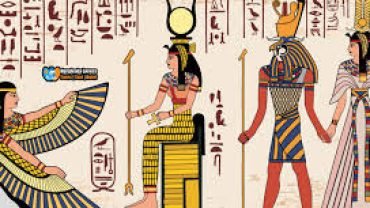
❓ Why did Egyptian gods have animal heads?
Egyptian gods were often shown with animal heads to symbolize their powers and qualities.
Examples:
- Anubis → Jackal head → protector of the dead
- Horus → Falcon head → ruler of the sky
- Bastet → Cat head → protection and grace
👉 This wasn’t random—each animal reflected a clear symbolic meaning that people instantly understood.
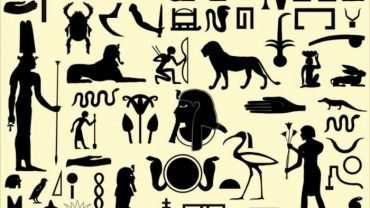
❓ What are the most famous Egyptian god symbols?
Ancient Egyptians used powerful symbols to represent divine forces:
- Ankh → Eternal life
- Eye of Horus → Protection and healing
- Djed Pillar → Stability and strength (linked to Osiris)
- Was Scepter → Power and authority
- Scarab Beetle → Rebirth and transformation
- Feather of Ma’at → Truth and justice
👉 These symbols weren’t decorative—they were believed to hold real spiritual power.
❓ What type of religion did ancient Egyptians follow?
Ancient Egyptian religion was polytheistic, meaning they worshipped many gods.
Each god controlled a specific part of life:
- Nature (sun, Nile, sky)
- Human life (birth, love, death)
- Cosmic balance (truth and justice)
At the center of everything was the concept of Ma’at—the principle of order and balance.
👉 Religion wasn’t separate from life—it controlled everything.
❓ Who were the 9 main gods of Egypt?
The most famous divine group is the Ennead of Heliopolis, which includes:
- Atum
- Shu
- Tefnut
- Geb
- Nut
- Osiris
- Isis
- Set
- Nephthys
👉 This group represents the core creation story of ancient Egypt.
❓ Who were the main gods and goddesses?
Some of the most important deities include:
- Ra – sun and creation
- Osiris – afterlife
- Isis – magic and motherhood
- Horus – kingship
- Anubis – mummification
- Thoth – wisdom
- Hathor – love and joy
- Sekhmet – war and healing
❓ What role did gods play in everyday life?
Egyptian gods weren’t distant—they were part of daily life:
- People prayed every morning to Ra
- Workers asked Ptah for success
- Families kept home altars for Isis or Bastet
- The dead were judged by Osiris
👉
❓ Did Egyptian gods change over time?
Yes—Egyptian gods evolved continuously:
- Some gods became more powerful
- Others disappeared
- Many merged (مثل Amun-Ra)
- New meanings were added over centuries
👉 This adaptability is why Egyptian religion lasted thousands of years.
❓ Do people still worship Egyptian gods today?
Yes, but on a much smaller scale.
Modern spiritual movements like Kemeticism still honor gods such as:
- Isis
- Ra
- Anubis
👉 These practices are modern reconstructions inspired by ancient traditions.
❓ What can we learn from Egyptian gods today?
Ancient Egyptian beliefs still offer powerful lessons:
- Balance → from Ma’at
- Transformation → from Osiris
- Wisdom → from Thoth
- Protection & love → from Isis






















Comment (0)