

Introduction: Where Power, Legacy, and Beauty Meet
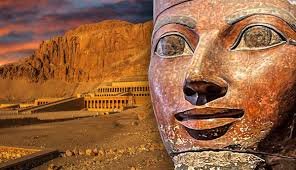
Rising dramatically beneath the towering cliffs of Deir el-Bahari, the Hatshepsut Temple is more than a monument—it’s a bold declaration carved in stone. This is not just a place of worship, but a carefully crafted story of ambition, identity, and eternal legacy.
Unlike other temples of ancient Egypt, this masterpiece speaks directly to us. It tells the story of a woman who refused to be confined by tradition, who claimed the throne in a male-dominated world, and who immortalized herself through one of the most breathtaking architectural achievements ever built.
In this ultimate guide, you’ll uncover everything about the Hatshepsut Temple—from its powerful history and revolutionary design to the secrets hidden within its walls.
Luxor Tour from Sharm El Sheikh by Plane – One-Day Spectacular
Private Day Trip from port Ghalib to Luxor
What Is Hatshepsut Temple?
The Hatshepsut Temple, also known as Djeser-Djeseru (“Holy of Holies”), is a mortuary temple built during the 18th Dynasty of ancient Egypt.
It was designed to serve multiple purposes:
- Honor Hatshepsut as a divine ruler
- Celebrate her achievements and legacy
- Provide a sacred space dedicated to major deities like Amun
What makes this temple extraordinary is not just its beauty—but the story behind its creation.
Who Was Queen Hatshepsut?
From Royal Daughter to Pharaoh
Born as the daughter of Thutmose I, Hatshepsut was destined for influence. She later married Thutmose II, following royal tradition.
After his death, she initially ruled as regent for the young heir, Thutmose III. But instead of stepping aside, she made a bold and unprecedented move—she crowned herself Pharaoh.
A Woman Who Ruled Like a King
To legitimize her authority, Hatshepsut:
- Adopted male royal titles and imagery
- Wore the traditional pharaoh’s beard
- Was depicted in statues as a male ruler
Her reign lasted around two decades—marked by stability, prosperity, and vision.
A Golden Age of Peace
Unlike many rulers, her focus was not war but growth:
- Expansion of trade networks (notably to the Land of Punt)
- Economic strength and stability
- Massive architectural projects across Egypt
Her temple stands as the ultimate symbol of this golden era.
Location: Where Is Hatshepsut Temple?
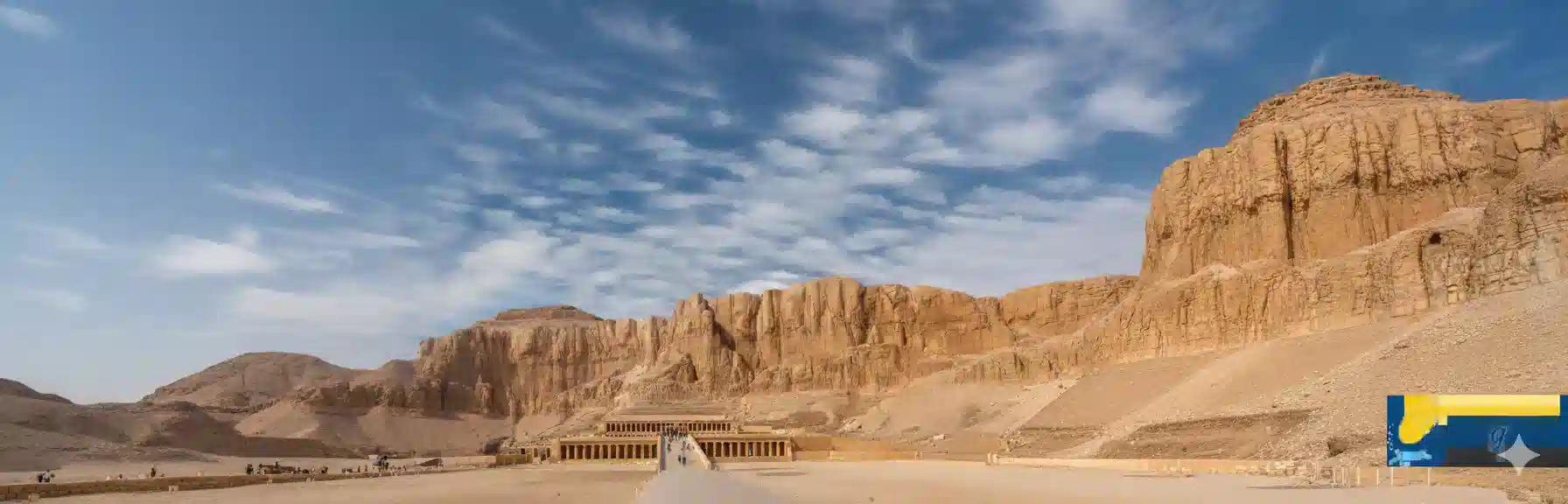
The temple is located on the west bank of the Nile near Luxor, one of the richest archaeological regions in the world.
Why This Location Matters
- Built beneath dramatic cliffs forming a natural amphitheater
- Positioned near the Valley of the Kings
- Located beside the temple of Mentuhotep II
This strategic placement reinforced Hatshepsut’s legitimacy by aligning her with great rulers of the past.
Architectural Brilliance: A Design Ahead of Its Time
A Temple Unlike Any Other
The Hatshepsut Temple is widely considered one of the most visually striking structures in Egypt.
Its defining features include:
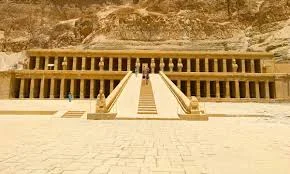
- Three massive terraces rising in perfect symmetry
- Long colonnades of elegant pillars
- Grand ramps connecting each level
What truly sets it apart is how it blends seamlessly into the natural cliffs—creating harmony between human design and nature.
Exploring the Three Levels of Hatshepsut Temple
Ground Level: Gardens and Processional Entry
Originally, the first terrace featured lush gardens filled with exotic trees brought from foreign lands.
Today, you can still see:
- Open courtyards
- Colonnaded walkways
- Reliefs depicting rituals and daily life
Second Level: Stories Carved in Stone
This is the storytelling heart of the temple.
Key Highlights
- Birth Colonnade: Depicts her divine origin linked to the god Amun
- Punt Expedition Reliefs: One of the earliest recorded trade missions in history
- Hathor Chapel: Dedicated to Hathor, goddess of love and joy
- Anubis Chapel: Honors Anubis, guardian of the dead
This level was not just decorative—it was political storytelling in stone.
Third Level: Sacred Power and Divine Authority
The upper terrace represents the most sacred part of the temple.
Here you’ll find:
- A grand portico with double columns
- The sanctuary dedicated to Amun
- Osiride statues representing eternal life through Osiris
Many original images of Hatshepsut were later erased—adding mystery to what remains.
Religious Significance: More Than a Monument
The temple was deeply spiritual, housing shrines for key gods:
- Amun – king of the gods
- Hathor – love and motherhood
- Anubis – mummification
- Osiris – afterlife
Each space reinforced Hatshepsut’s divine right to rule and her connection to the gods.
The Hidden Story: Why Her Legacy Was Erased
After her death, something dramatic happened.
Her successor, Thutmose III, initiated a campaign to:
- Destroy her statues
- Remove her name from monuments
- Replace her images
Why Did This Happen?
Historians suggest:
- Political strategy to secure succession
- Desire to restore traditional male rule
- Fear of setting a precedent for female kings
Ironically, this attempt to erase her made her story even more powerful today.
What to See at Hatshepsut Temple Today
Despite centuries of damage, the temple remains one of Egypt’s best-presed sites.
Must-See Highlights
- The massive terraces and ramps
- Intricate wall carvings
- Hathor-headed columns
- The sanctuary of Amun
- Remains of royal statues
Every corner of the temple tells a story.
Best Time to Visit
To get the most out of your visit:
- Early morning: Best light and cooler temperatures
- Winter (Oct–Apr): Comfortable weather but more tourists
- Summer: Fewer crowds but intense heat
Travel Tips for Visiting
Before you go:
- Wear comfortable shoes
- Bring sunscreen, hat, and water
- Consider a guide for deeper insight
- Combine your visit with nearby attractions like the Valley of the Kings
Why Hatshepsut Temple Is Truly Unique
What makes this temple exceptional is the combination of:
- A rare female pharaoh’s legacy
- Revolutionary architectural design
- A peaceful and prosperous reign
- A seamless blend of art, religion, and politics
Few monuments in the world capture all of this in one place.
Conclusion: A Legacy That Refused to Disappear
The Hatshepsut Temple is not just a destination—it’s a story carved into eternity.
Despite attempts to erase her, Hatshepsut remains one of the most powerful figures in history. Her temple stands today as proof that ambition, intelligence, and vision can outlast even time itself.
If you ever visit Egypt, this is not just a site to see—it’s an experience to feel.
FAQ Section
1. Where is Hatshepsut Temple located?
It is located at Deir el-Bahari near Luxor on the west bank of the Nile.
2. Who built Hatshepsut Temple?
It was commissioned by Hatshepsut and designed by her architect Senenmut.
3. Why is Hatshepsut Temple famous?
For its unique architecture, stunning location, and connection to one of Egypt’s most powerful female rulers.
4. What does Djeser-Djeseru mean?
It means “Holy of Holies.”
5. How long did it take to build?
Around 15 years.
6. What can you see inside?
Terraces, reliefs, chapels, and sanctuaries dedicated to Egyptian gods.
7. Why were her images destroyed?
Likely due to political reasons by Thutmose III.
8. Is it worth visiting?
Absolutely—it’s one of Egypt’s most iconic landmarks.
9. When is the best time to visit?
Early morning is ideal.
10. How far is it from Luxor?
About 30 minutes by car.
11. What makes it different?
Its terraced design and integration with cliffs.
12. Can I visit nearby sites?
Yes, especially the Valley of the Kings.
13. Was Hatshepsut a real pharaoh?
Yes, she ruled Egypt for about 20 years.
14. Is the temple well preserved?
Yes, much of its structure remains intact.
15. Do I need a guide?
Not required, but highly recommended for a richer experience.


























Comment (0)