

Egypt, a land of timeless wonders, ancient pyramids, and vibrant culture, thrives because of one river: the Nile. This majestic river has shaped Egypt’s history, economy, religion, and culture for thousands of years. Known as the “Gift of the Nile,” it sustains life in a desert land. But why exactly is Egypt called the gift of the Nile? Let’s explore the river’s history, significance, and lasting influence.

History of the Nile in Egypt
The Nile stretches over 6,650 kilometers (4,130 miles), making it the longest river in the world. It flows from the highlands of East Africa to the Mediterranean Sea. Ancient Egyptians viewed the Nile not just as a water source but as a miraculous lifeline.
Egyptian civilization began around 3100 BCE along the fertile banks of the river. Unlike unpredictable rivers elsewhere, the Nile flooded regularly, leaving behind nutrient-rich silt. This consistency allowed Egyptians to plan agriculture and settle in stable communities, creating one of the earliest complex societies.
The river has two main tributaries: the White Nile, from central Africa’s Great Lakes, and the Blue Nile, originating in Ethiopia’s highlands. They meet at Khartoum in Sudan, forming a steady river that has supported Egypt for millennia.

How the Nile Shaped Ancient Egyptian Civilization
Agricultural Development
Agriculture explains why Egypt earned the title “Gift of the Nile.” Each year, the river flooded, depositing fertile soil across the valley and delta. This soil allowed Egyptians to grow wheat, barley, flax, and vegetables. With abundant food, the population grew, cities developed, and the ruling class could invest in art, temples, and monumental structures.
Transportation and Trade
The Nile also served as Egypt’s main highway. Boats transported goods, people, and ideas between Upper and Lower Egypt. Traders used the river to exchange materials with Nubia and the Levant. Additionally, Egyptians moved limestone, granite, and gold along the Nile, building iconic structures such as pyramids and temples.
Religion and Cultural Importance
The Egyptians worshiped the Nile as a divine gift. They personified the river through gods like Hapi, the god of floods. Temples and festivals honored the river’s life-giving power. Ancient Egyptians believed that the annual flooding guaranteed survival and prosperity.
Myths and Legends
The Nile appears in countless myths. One story tells of Hapi pouring water onto the fields, ensuring a rich harvest. Another legend claims that the goddess Işid cried for her husband Osiris, and her tears formed the river. Such tales reinforced the Nile’s sacred status.
Agriculture and Economy Thanks to the Nile
The Nile created a stable economy. Farmers built canals, reservoirs, and basins to maximize the seasonal floods. Surplus crops allowed Egypt to trade grain, papyrus, and linen with neighboring regions. The river’s stability enabled large populations, monumental architecture, and long-lasting dynasties.
Even today, the Nile fuels Egypt’s economy. It irrigates farmland, powers hydroelectric plants like the Asvan Yüksek Barajı, and supports fishing. Tourism also thrives along the river, attracting visitors to cruises, ancient sites, and cultural festivals.
The Nile in Modern Egypt
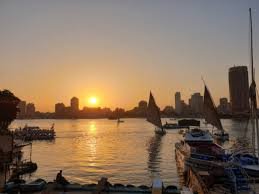
Modern Egypt still depends on the Nile. Cities such as Cairo, Luxor, and Aswan owe their survival to the river. It provides water, food, and transportation for millions. Engineers have built dams and irrigation systems to maintain agriculture and urban life.
However, challenges like pollution, overuse of water, and climate change threaten the river. Egypt collaborates with neighboring countries to manage water use, protect biodiversity, and preserve this ancient lifeline.
Sonuç
Egypt truly deserves the title “Gift of the Nile.” The river enabled agriculture, trade, religion, and culture for thousands of years. Today, it continues to sustain the country’s economy and identity. To understand Egypt, one must understand the Nile—it remains the heart of this remarkable civilization.
 English
  German
  French
  Polish
  Russian
  Czech
Czech  Spanish
  Romanian
  Turkish
  Italian
  Hungarian
0 Comment