

the Glorious Past of Luxor Temple: A Guide to its History, Architecture, Deities and Statues in Luxor, L'egypte“
Luxor Temple, located in the heart of the ancient city of Luxor in southern Egypt, is one of the most remarkable and well-preserved temples of the ancient world. Built over 3,400 years ago, this magnificent temple complex symbolizes the spiritual and political power of Egypt’s New Kingdom pharaohs and stands today as a testament to their architectural genius and religious devotion. Dedicated primarily to Amun, the king of gods, and his consort Mut, the temple played a central role in the religious and ceremonial life of ancient Thebes.
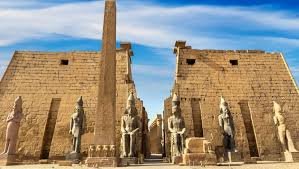
Architectural Marvels of Luxor Temple
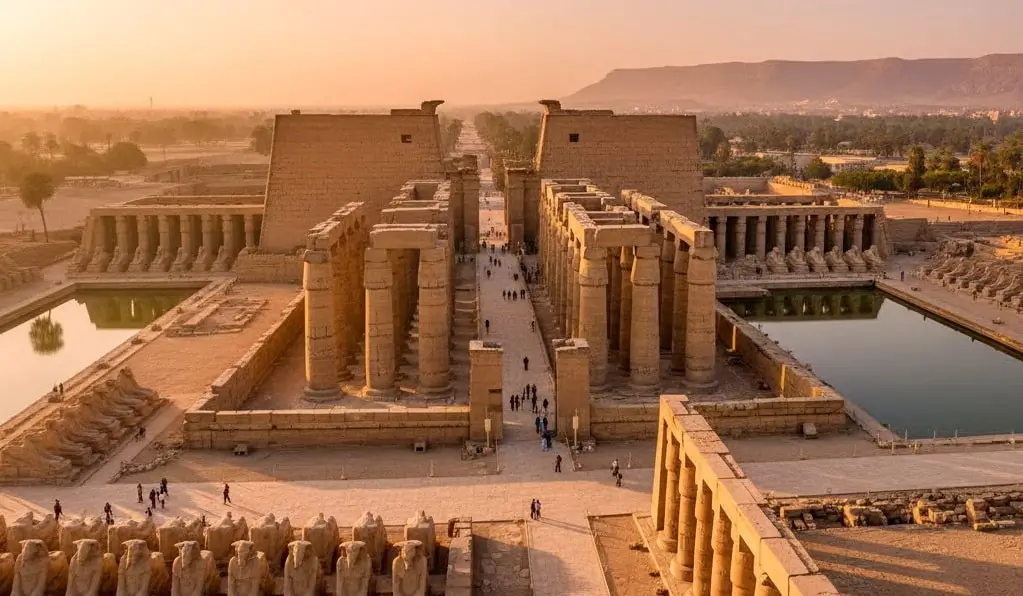
The main entrance of Luxor Temple faces south and is flanked by two towering pylons, leading visitors into a vast open courtyard. The temple is famous for its grandiose columns, intricately carved reliefs, colossal statues, and majestic obelisks, which showcase the skill and artistry of ancient Egyptian architects and artisans. Within the temple are smaller chapels, sanctuaries, and halls dedicated to various gods and goddesses, making the complex not just a religious site but also a symbol of Egypt’s cultural richness.
One of the highlights of the temple is the Avenue des Sphinx, an impressive walkway lined with sphinx statues that connect Luxor Temple to the nearby Karnak Temple, further emphasizing the ceremonial importance of the site. Visitors can also explore the hypostyle hall, sacred lake, and numerous shrines, each narrating stories of divine worship and pharaonic glory.
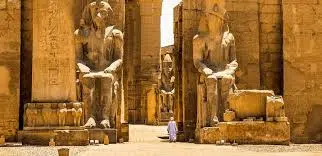
Builders and Construction of Luxor Temple
Luxor Temple was not the creation of a single pharaoh but a cumulative work built and expanded over centuries. The initial construction is attributed to Pharaoh Amenhotep III of the 18th dynasty, around 1390 BCE. Later, Ramsès II, one of Egypt’s most powerful rulers, added monumental statues and massive pylons to the complex. Other pharaohs, including Toutankhamon et Horemheb, contributed further additions. Skilled teams of architects, engineers, and laborers ensured that every column, wall relief, and statue reflected the grandeur of pharaonic Egypt.
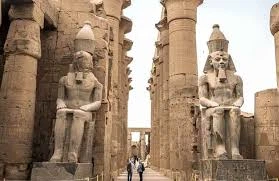
Purpose and Religious Significance
Luxor Temple was built as a spiritual center dedicated to Amun, part of the Theban Triad, along with Mut and Khonsu. The temple served as a venue for religious ceremonies, royal rituals, and festivals, the most famous being the annual Opet Festival, which celebrated the divine rejuvenation of the pharaoh and the unity of the kingdom. Its religious significance also reinforced the political authority of the pharaohs, as the temple symbolized their divine connection and legitimacy to rule.
Over time, Luxor Temple adapted to changing religious landscapes. During the Christian period, parts of the temple were converted into a church, and later, during the Islamic era, some sections served as a mosque. Despite these transformations, much of the temple’s original grandeur has been preserved, allowing modern visitors to experience its historical and cultural richness.
Iconic Statues and Relics
Visitors to Luxor Temple encounter colossal statues of Ramses II, impressive reliefs depicting pharaohs and gods, and shrines dedicated to queens like Hatchepsout. The temple also houses sacred rooms and chapels, including the divine birthing room and coronation hall, reflecting ancient Egyptian beliefs in kingship, divinity, and the cycle of life. Every column, statue, and relief narrates stories of power, devotion, and artistry, making Luxor Temple a living museum of ancient civilization.
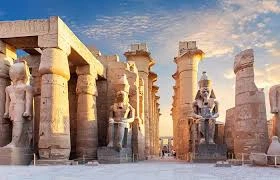
Modern-Day Significance and Tourism
Today, Luxor Temple is one of Egypt’s most visited sites, attracting tourists, historians, and archaeologists alike. Visitors can walk along the corridors once used for grand processions, admire the 12-columned halls, Alexander Chapel, and ceremonial courts, and marvel at the engineering mastery of a civilization that thrived over three millennia ago. The temple’s enduring beauty and historical importance make it not only a centerpiece of Luxor’s cultural landscape but also a symbol of Egypt’s timeless legacy.
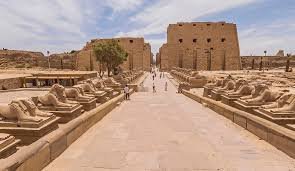
Luxor Temple Architecture: A Journey Through Ancient Egyptian Mastery
Luxor Temple stands as one of the most spectacular examples of ancient Egyptian architecture, showcasing the grandeur and religious significance of the New Kingdom. Every corner of the temple complex—from massive pylons to intricately decorated chapels—tells a story of pharaonic power, divine worship, and architectural genius.
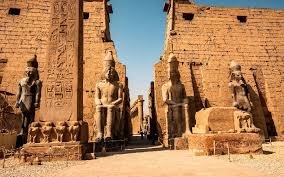
The Second Pylon: Monumental Gateway of Ramses II
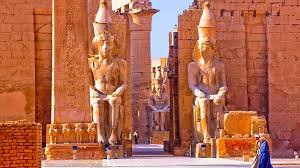
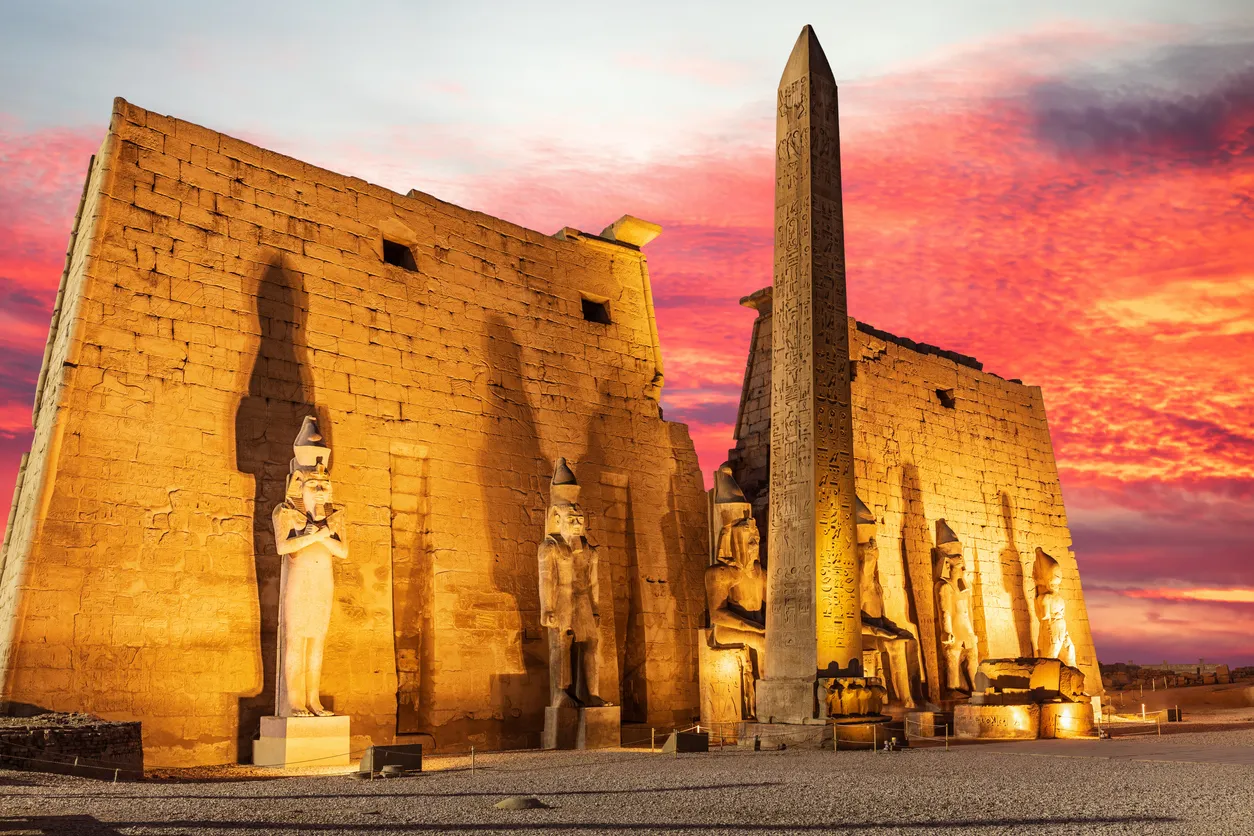
. second pylon of Luxor Temple is among its largest and most impressive structures. Towering over 50 meters high, it consists of two colossal towers adorned with detailed reliefs and inscriptions celebrating the victories and achievements of Pharaoh Ramses II. At its base stand two enormous seated statues of the pharaoh, each weighing over 70 tons, accompanied by smaller figures representing members of his family and high-ranking officials. This monumental gateway served as the grand entrance to the temple’s inner sanctuaries, symbolizing both the spiritual and political authority of ancient Egypt.
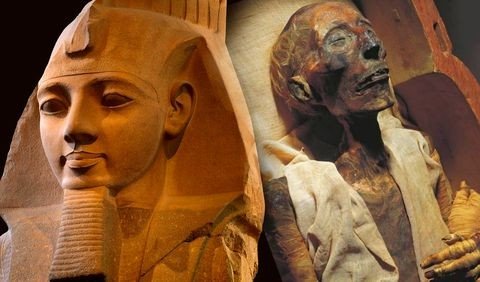
Pharaonic Legacy: King Ramses II
Known as Ramses the Great, Ramses II reigned from 1279 to 1213 BCE and is celebrated as one of Egypt’s most powerful pharaohs. His 67-year rule saw remarkable military campaigns, territorial expansion, and the construction of iconic monuments such as the Ramesseum in Thebes et la Abu Simbel temples in Nubia. At Luxor, Ramses II added towering statues, pylons, and inscriptions, many of which glorify the god Amun and reinforce the pharaoh’s divine status. His contributions to Luxor Temple remain a central highlight for visitors today.
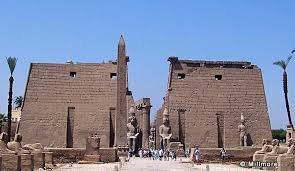
West Side of Luxor Temple: A Grand Entrance
. west (right) side of Luxor Temple features a commanding entrance marked by a massive pylon built by Ramses II. Rising approximately 80 feet, this pylon is adorned with reliefs depicting military victories and ceremonial rituals. Beyond the pylon lies a large open courtyard, lined with towering columns and monumental statues of Ramses II. This side also hosts several smaller chapels and shrines, including the Chapel of Alexander the Great, dating back to the 4th century AD, offering visitors a glimpse into Egypt’s layered history.
East Side of Luxor Temple: Architectural Wonders
. east (left) side of the temple is home to some of Luxor Temple’s most iconic features:
- The First Pylon: Built by Ramses II, it showcases six colossal statues symbolizing his unmatched strength and power.
- Court of Ramses II: An open courtyard surrounded by smaller temples and shrines dedicated to various gods and goddesses.
- Shrines of Hatshepsut and Thutmose III: These shrines honor two of ancient Egypt’s most influential pharaohs, offering insight into their divine and political significance.
- Second Pylon: Featuring two seated statues of Ramses II, it mirrors the grandeur of the temple’s west side.
- Corridor of Amenhotep III’s Procession: A passageway used during the annual procession of Amun, adorned with intricate reliefs depicting scenes from Egyptian mythology.
Together, these structures provide a comprehensive view of ancient Egyptian architectural styles and their symbolic connection to religion and royalty.
The First Courtyard: Heart of Ceremonial Life
. first courtyard of Luxor Temple, located at the temple’s front, served as a gathering space for religious and cultural ceremonies. Originally built during the New Kingdom and later expanded by subsequent pharaohs, this courtyard is surrounded by pylons, colossal statues, and intricately carved reliefs that celebrate the achievements and victories of the pharaohs. It remains one of the temple’s most important and visually striking architectural features.
Chapels of Thutmose III: Sacred Spaces for Worship
. chapels of King Thutmose III, dedicated to Amun, the king of gods, are an essential part of Luxor Temple’s religious architecture. Thutmose III, a pharaoh who reigned for over 50 years, used these chapels for ceremonial purposes, offerings, and rituals. Today, these chapels allow visitors to experience the spiritual and cultural practices of ancient Egypt firsthand, highlighting the temple’s role as both a religious and political center for millennia.
Inside Luxor Temple: Courtyards, Halls, Shrines, and Sacred Spaces
Luxor Temple is not only a marvel of ancient architecture but also a spiritual center that reflects the religious life, artistry, and power of New Kingdom Egypt. The temple’s interior features a variety of courtyards, halls, chapels, and shrines, each designed for ceremonial and ritual purposes. Exploring the temple offers a unique window into the worship practices, mythology, and monumental architecture of ancient Egypt.
Courtyard of the 14 Columns
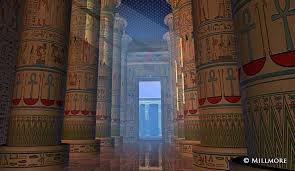
. Courtyard of the 14 Columns is one of Luxor Temple’s most striking architectural features. Surrounded by a peristyle of 14 towering papyrus-bud columns, each over 20 meters high, this courtyard is believed to represent the 14 districts of Thebes, the city where the temple stands. The columns are arranged in two rows and feature capitals shaped like papyrus flowers, symbolizing growth, life, and divine connection. In ancient times, the courtyard hosted religious ceremonies and processions, offering a spectacular display of Egypt’s ceremonial grandeur.
Temple of Amenophis III
Built by Pharaoh Amenophis III of the 18th dynasty (circa 1391–1353 BCE), the Temple of Amenophis III is dedicated to the god Amun. This expansive temple was a center of religious festivals, military commemorations, and royal rituals. The walls preserve detailed scenes of the pharaoh’s campaigns, hunting expeditions, and the famous Fête D'Opet, in which sacred statues of Amun, Mut, and Khonsu were transported from Karnak Temple to Luxor Temple. Today, it remains a prime site for studying ancient Egyptian art, religion, and architecture.
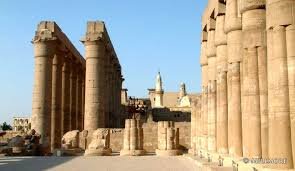
Alexander Chapel
A small but historically significant space, the Alexander Chapel was added during the Roman era and is dedicated to Alexandre le Grand. Situated near the temple entrance, it served as a place of worship for the emperor and includes inscriptions and reliefs commemorating his influence.
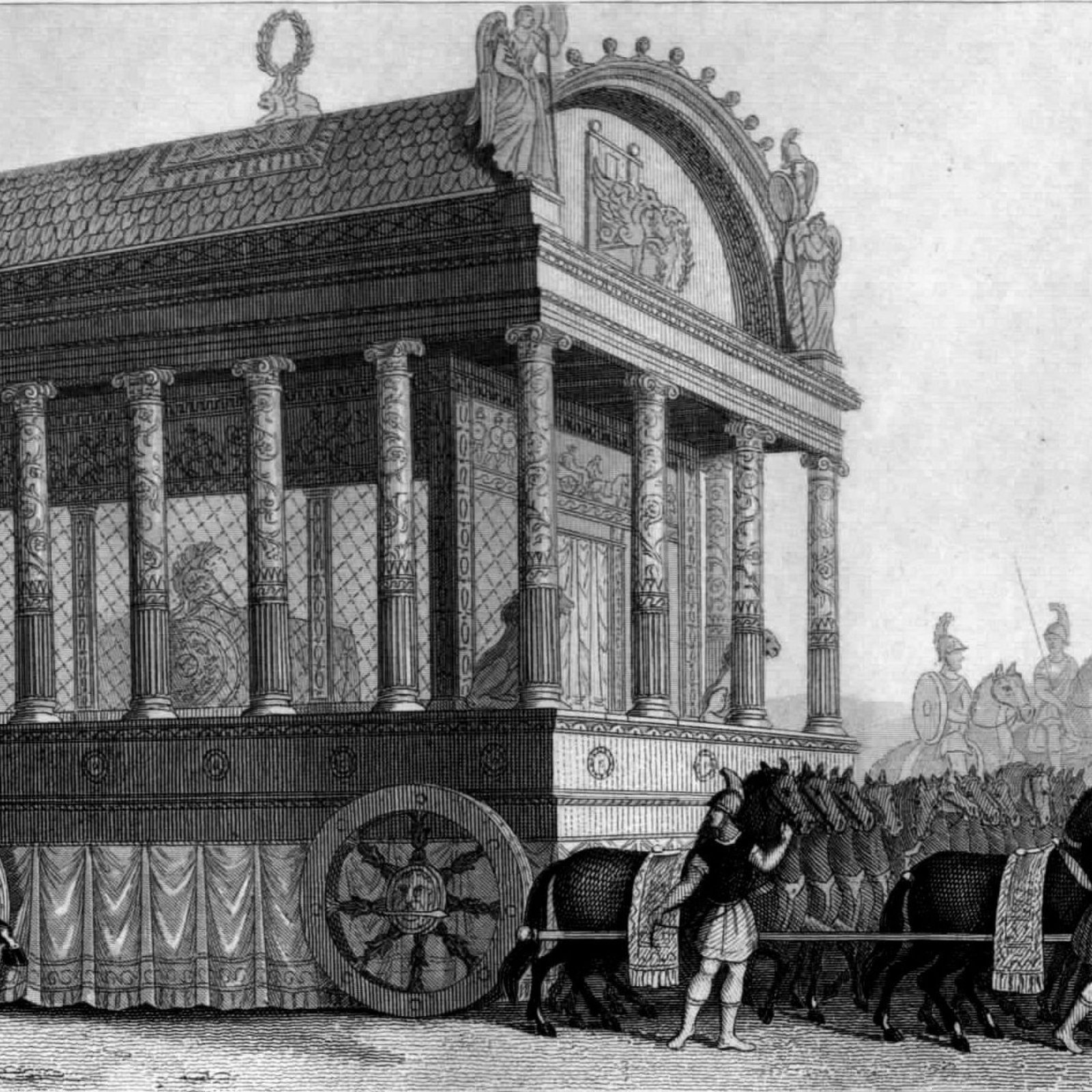
Coronation Room and Divine Birthing Room
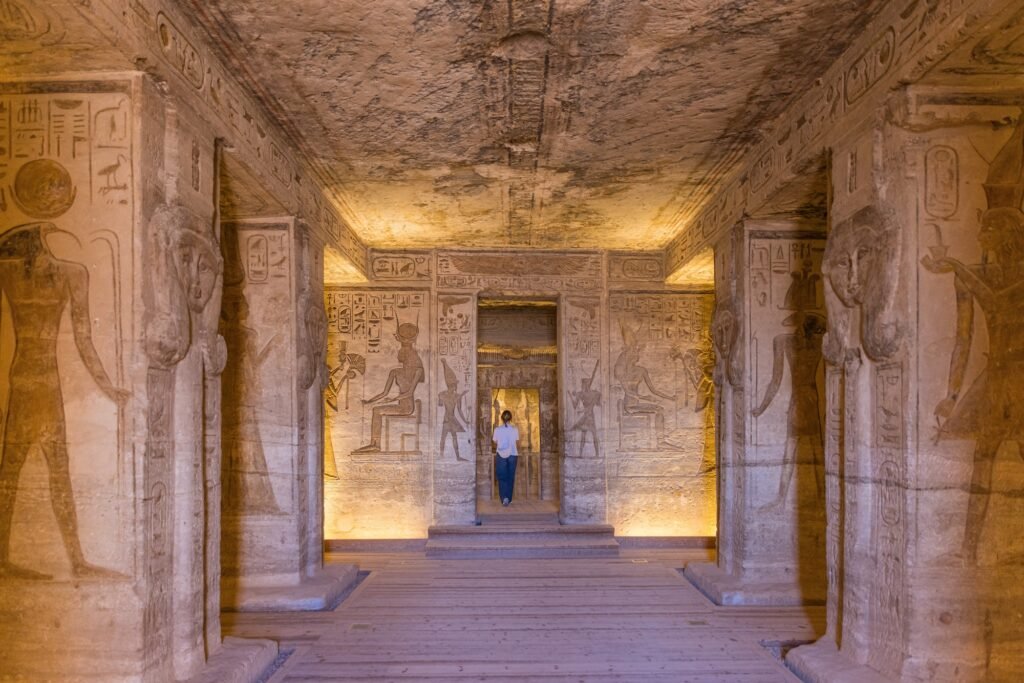
. Coronation Room is believed to have been where pharaohs received their crowns, with inscriptions and reliefs depicting ancient coronation ceremonies. Nearby, the Divine Birthing Room celebrates the myth of Isis giving birth to Horus, a central story in Egyptian mythology. This room contains vivid carvings illustrating the divine birth, emphasizing the pharaohs’ sacred lineage.
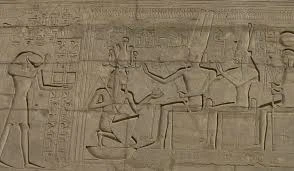
12-Columned Halls
Luxor Temple contains multiple 12-columned halls, designed for rituals, offerings, and ceremonies conducted by pharaohs and priests. These halls highlight the Egyptian mastery of symmetry, stonework, and sacred space, providing an awe-inspiring atmosphere for worship and celebration.
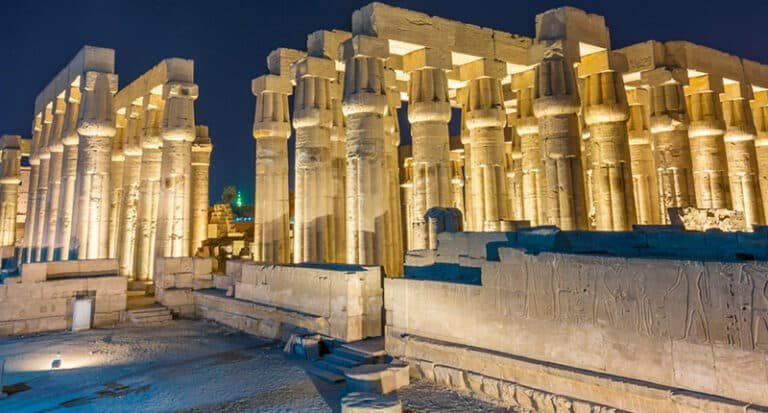
Shrines of the Sacred Boats
The temple houses three shrines dedicated to the sacred boats of Amun, Mut, and Khonsu, which were central to the annual Opet Festival. During this festival, the gods’ statues were transported along the Avenue des Sphinx, linking Luxor Temple with Karnak Temple and reinforcing the pharaoh’s divine authority.
Other Notable Features
- First Pylon: Six colossal statues of Ramses II symbolize his strength and dominance.
- Court of Ramses II: Includes shrines for Queen Hatshepsut and King Thutmose III.
- Second Pylon: Features two seated statues of Ramses II, highlighting pharaonic grandeur.
- Corridor of Amenhotep III’s Procession: Adorned with carvings depicting ceremonial processions of Amun.
- Vestibule: Used for offerings to Amun, leading to inner sanctuaries.
- Holy of Holies: Houses the Luxor Triad—Amun, Mut, and Khonsu—for sacred offerings.
- Perimeter Wall: Constructed from soft bricks, typical of ancient Egyptian architecture.
Luxor Temple Deities
The temple was primarily dedicated to Amun, the king of gods, but it also honored a host of other deities associated with creation, the sun, the moon, and cosmic order. Key deities worshipped here include:
- Amun, the supreme god
- Mut, goddess and consort of Amun
- Khonsou, the moon god
- Amenmobet, god of wisdom
- Ra, the sun god
- Montu, god of war
- Hathor, goddess of love and music
- Nut, goddess of the sky
- Maat, goddess of truth and justice
Statues and Sculptures
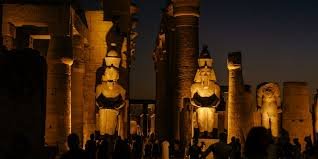
The temple is adorned with majestic statues and sphinxes, including six colossal statues of Ramses II, which stand as timeless symbols of pharaonic power and divine connection. Every sculpture, from the smallest relief to the largest pylon statue, reflects the skill, devotion, and artistic mastery of ancient Egyptian craftsmen.
What Makes Luxor Temple So Special?
Luxor Temple is one of the most remarkable and historically significant temples in Egypt, drawing visitors from around the world to witness its ancient grandeur. Its uniqueness lies in a combination of historical, architectural, religious, and artistic features that together make it a true symbol of ancient Egyptian civilization.
Historical Significance
Dating back over 3,400 years to the New Kingdom period, Luxor Temple was a major center for religious, cultural, and political life in ancient Thebes, the city now known as Luxor. It witnessed countless ceremonies, festivals, and events that reflected the power of the pharaohs and the spiritual devotion of their people. Throughout its long history, the temple was expanded by successive rulers, including Amenhotep III et Ramsès II, making it a living chronicle of Egypt’s dynastic achievements.
Architectural Marvel
Luxor Temple is a masterpiece of ancient Egyptian architecture. Its monumental pylons, vast open courtyards, grand colonnades, and intricately carved reliefs showcase the skill, creativity, and engineering genius of Egyptian architects. The temple’s design reflects the wealth and authority of the pharaohs, with structures carefully planned to honor the gods and impress both subjects and visitors alike.
Importance Religieuse
Dedicated primarily to the god Amun, along with his consort Mut and their son Khonsou, Luxor Temple was the spiritual heart of Thebes. It was the site of the annual Opet Festival, a grand celebration that reinforced the divine power of the pharaoh and the unity of the kingdom. Over time, the temple also accommodated Coptic Christian and Islamic worship, highlighting its enduring spiritual relevance and cultural adaptability.
Artistic Value
The temple is adorned with stunning carvings, statues, and reliefs, including depictions of King Amenhotep III and colossal statues of Ramses II. Every hall, courtyard, and shrine is decorated with artistic masterpieces that narrate Egypt’s mythology, royal achievements, and religious beliefs, making Luxor Temple a living gallery of ancient Egyptian art.
Unique Features
Luxor Temple is unique for its multi-religious history, having been used by Egyptians, Christians, and Muslims over millennia. Its well-preserved monuments, courtyards, and statues allow visitors to explore the layered history of Egypt, offering a glimpse into both ancient and more recent cultural traditions.
Symbolism of Luxor Temple
Luxor Temple symbolizes the religious, political, and cultural significance of ancient Thebes. It reflects the pharaohs’ divine authority, the central role of Amun in Egyptian theology, and the architectural brilliance of New Kingdom Egypt. The temple was also a ceremonial site for crowning kings, religious processions, and offerings, making it a symbol of Egyptian power, devotion, and artistic achievement.
About King Amenhotep III
The temple owes much of its grandeur to Le roi Amenhotep III (1386–1353 BCE), the ninth pharaoh of the 18th dynasty. Known for his peaceful reign, diplomatic skill, and monumental constructions, Amenhotep III commissioned many iconic structures, including the les impressionnants Colosses de Memnon. et la temples at Luxor and Karnak. His legacy as a patron of art, architecture, and culture is intricately preserved within Luxor Temple, marking him as one of Egypt’s most celebrated rulers.
Location, Hours, and Tickets
- Emplacement: East Bank, Luxor, Egypt
- Opening Hours: Daily, 6:00 AM – 8:00 PM
- Ticket Prices:
- Foreigners: Adult EGP 180 | Student/Child (5–10) EGP 90
- Egyptians/Arabs: Adult EGP 40 | Student/Child (5–10) EGP 20
Why Luxor Temple Remains a Must-Visit
From its strategic location in the ancient city of Thebes, to its architectural grandeur, religious significance, and artistic masterpieces, Luxor Temple remains a unique window into ancient Egyptian civilization. Its enduring beauty and historical importance continue to attract thousands of visitors each year, making it a must-see destination for travelers, historians, and cultural enthusiasts alike.
What Is Inside the Luxor Temple?
. Le Temple De Louxor, located in the heart of Luxor, Egypt, is a stunning ancient Egyptian temple complex dedicated to the gods Amun, Mut, and Khonsu. Visitors can explore a wide range of architectural and artistic features that reflect the grandeur of Egypt’s New Kingdom period.
Key Architectural Elements
- Corridor of King Amenhotep III’s Procession
This corridor is lined with 14 towering columns crowned with open papyrus capitals, representing both the pharaoh’s divine authority and the spiritual symbolism of the sacred procession. It was used for ceremonial events honoring the gods. - Imperial Cult Chapel
Added during the Roman era, this chapel contains inscriptions dedicated to Imperator Diocletian and his companions, highlighting the temple’s long history of use and adaptation by successive rulers. - Vestibule (Second Antechamber)
The vestibule served as a sacred space for making offerings to Amun, marking the entrance to the deeper and more spiritual areas of the temple. - Park of Amun Tombs
These tombs feature inscriptions from King Amenhotep III and Alexander the Great, linking Luxor Temple to centuries of Egyptian and foreign rulers who contributed to its legacy. - Coronation Room
This room contains detailed inscriptions depicting the coronation of King Amenhotep III, emphasizing the temple’s role as a ceremonial hub for pharaonic power. - Divine Birth Room
Walls in this room portray scenes of the divine birth of Amenhotep III, illustrating the close connection between pharaohs and gods in ancient Egyptian belief. - 12-Columned Tomb of Alexander Park of Amun
A striking hall supported by 12 columns, serving as a ceremonial area within the temple complex. - Holy of Holies
Built during the reign of Amenhotep III, this sacred space contains three small rooms for offerings to the Luxor Trinity: Amun, Mut, and Khonsu.
Statues and Sculptures
Luxor Temple is home to several iconic statues and sculptures, y compris:
- Rows of sphinxes guarding the temple avenues
- Six colossal statues of King Ramses II that symbolize royal power and divine authority
These features make Luxor Temple not only a religious center but also a showcase of ancient Egyptian art, craftsmanship, and ceremonial design.
Things to Do Nearby in Hurghada
While exploring Luxor, travelers often combine their trip with exciting activities in Hurghada and the surrounding Red Sea area, such as:
- Snorkeling and Diving: Orange Bay Hurghada Island Trip, Paradise Island Trip, Full-Day Scuba Diving, Utopia Island, Dolphin House
- Day Trips: Cairo Pyramids, Luxor Day Trips, El Gouna excursions, Sahl Hasheesh tours
- Activités Nautiques: Dolphin shows, Grand Aquarium visits, private boat trips, fishing trips
- Aventures Du Désert: Jeep Safari, Quadbike Safari, Sand Dune tours
- Special Packages: Small group tours (6–8 people), private transfers from El Gouna, Makadi Bay, Soma Bay, Sahl Hasheesh, and Safaga
These trips offer affordable and convenient options to explore the best of Upper and Lower Egypt in combination with the Luxor Temple experience.
FAQ About Luxor, Egypt
Where is Luxor located?
Luxor is located in Upper Egypt on the east bank of the Nile River. It was the ancient city of Thebes and served as the capital during the New Kingdom period.
What are the main attractions in Luxor?
Luxor is famous for the Luxor Temple, Karnak Temple, Valley of the Kings, Valley of the Queens, Hatshepsut Temple, Colossi of Memnonet Nile River tours.
What is the best time to visit Luxor?
L'idéal mois sont de D'octobre à avril, when the weather is moderate and perfect for sightseeing and Nile cruises.
How much is the entrance fee for Luxor Temple?
Foreign tourists pay around EGP 180 for adults et EGP 90 for students or children. Egyptian and Arab visitors pay EGP 40 for adults et EGP 20 for students or children.
Can I visit the Valley of the Kings and Luxor Temple in the same day?
Yes, many Luxor Day Trips include visits to both Le Temple De Louxor et la Vallée des Rois with a guided tour.
What is the Nile in Luxor famous for?
The Nile offers scenic views, boat cruiseset sunset felucca rides, which are popular among tourists.
Are there Nile cruises available in Luxor?
Yes, tourists can enjoy sunset and full-day Nile cruises, including trips to West Bank temples and nearby villages.
What are the famous festivals in Luxor?
The ancient Fête D'Opet was celebrated in Luxor, with grand religious processions from Temple De Karnak pour Le Temple De Louxor.
Which museums can I visit in Luxor?
. Luxor Museum et Mummification Museum are the most popular, showcasing artifacts from the New Kingdom and ancient Egyptian relics.
Are there luxury hotels in Luxor?
Yes, options include Sofitel Legend Old Cataract, Steigenberger Nile Palace, and other 5-star hotels along the Nile.
What is the best way to get around Luxor?
Visitors can use taxis, tuk-tuks, or book organized tours covering all main attractions.
What are the top activities in Luxor?
Sightseeing Luxor Temple, Karnak Temple, Hatshepsut Temple, Nile cruises, sound and light shows, hot air balloon rides, and visiting local markets.
Is Luxor suitable for family trips?
Yes, family-friendly activities include guided tours, boat rides, and educational visits to the Vallée des Rois and museums.
How old is Luxor?
Luxor has over 4,000 years of history as the ancient city of Thebes, with many temples and royal tombs.
Are there restaurants in Luxor?
Yes, local restaurants serve traditional Egyptian cuisine such as koshari, ful medames, and Egyptian bread.
Is photography allowed inside the temples?
Photography is generally allowed without flash. Professional cameras may require permission.
Which major cities are near Luxor?
Assouan is to the south, and Le caire is about 670 km to the north.
What is the Valley of the Kings?
It is the burial site of New Kingdom pharaohs, including Tutankhamun, Ramses II, and other rulers.
Are there markets in Luxor?
Yes, Luxor’s central market offers souvenirs, handicrafts, jewelry, and traditional Egyptian art.
What are famous handicrafts in Luxor?
Pharaonic replicas, hand-woven carpets, papyrus paintings, and jewelry are popular souvenirs.
Are there night tours in Luxor?
Oui, sound and light shows at Temple De Karnak et Le Temple De Louxor are a magical evening experience.
How long is the Avenue of Sphinxes?
The avenue stretches 2.7 km between Temple De Karnak et Le Temple De Louxor, lined with sphinx statues.
Can I travel from Luxor to Aswan in a day?
Yes, via train, Nile cruise, or private car tours.
Do I need a guide in Luxor?
A guide is recommended for a full understanding of Luxor Temple, Karnaket Vallée des Rois.
Can I visit Luxor Temple and Karnak in the same tour?
Yes, most half-day or full-day Luxor tours include both temples.
When is the best time for photography in Luxor?
During sunrise and sunset, when temples are illuminated with golden light.
What is Hatshepsut Temple?
A mortuary temple of the female pharaoh Hatchepsout, located on the West Bank cliffs of Luxor.
Does Luxor have an airport?
Oui, Luxor International Airport serves domestic and international flights.
What are the popular Nile boat trips in Luxor?
Felucca sunset trips, full-day Nile cruises, tours to West Bank temples, and guided trips to villages along the Nile.
Is Luxor suitable for all types of travelers?
Yes, Luxor is perfect for history lovers, cultural tourists, families, and adventure seekers.
20 FAQ About Luxor Temple
Where is Luxor Temple located?
On the east bank of the Nil in Luxor, Egypt.
Who built Luxor Temple?
It was started by Pharaoh Amenhotep III and expanded by Ramsès II during the 18th and 19th dynasties.
When was Luxor Temple built?
Around the 14th century BCE, during the New Kingdom period.
To which gods was Luxor Temple dedicated?
Primarily to Amun, along with Mut et Khonsou, forming the Luxor Triad.
What are the main features of Luxor Temple?
Pylons, courtyards, 14-columned halls, colonnades, obelisks, sphinxes, and statues of Ramsès II et Amenhotep III.
How long is Luxor Temple?
Environ 260 meters from the main entrance to the Holy of Holies.
What is the inner sanctuary of Luxor Temple?
It contains the Coronation Room, Divine Birth Roomet Holy of Holies, used for rituals and royal ceremonies.
How many columns are in the Courtyard of 14 Columns?
There are 14 papyrus-bud columns, symbolizing the 14 districts of ancient Thebes.
What was Luxor Temple used for?
It was used for religious ceremonies, coronation of pharaohset annual Opet Festival.
Are there statues inside Luxor Temple?
Yes, including 6 colossal statues of Ramses II, sphinxes, and statues of Amenhotep III.
Was Luxor Temple used later by other religions?
Yes, parts were converted into Coptic churches et Islamic mosques in later periods.
What is the Alexander Chapel?
A small Roman-era addition dedicated to Alexandre le Grand, located near the entrance.
What is the Divine Birth Room?
It depicts the divine birth of Pharaoh Amenhotep III, linking him to the gods.
Are there hieroglyphs in Luxor Temple?
Yes, walls are covered with inscriptions and reliefs narrating royal achievements and religious rituals.
What are the colossal statues at Luxor Temple?
Large statues of pharaohs at the entrances symbolizing their divine authority and power.
What are papyrus-bud columns?
Columns shaped like papyrus flowers, representing growth, fertility, and divine connection.
What is the artistic style of Luxor Temple?
It features reliefs, statues, and carvings depicting mythology, royal history, and religious ceremonies.
Is Luxor Temple open daily?
Oui, 6:00 AM to 8:00 PM for tourists and visitors.
Are guided tours available at Luxor Temple?
Oui, guided tours explain the temple’s history, architecture, and religious significance.
Why is Luxor Temple important today?
It is a major tourist attraction, cultural heritage site, and a key example of ancient Egyptian civilization, art, and architecture
 English
  German
  French
  Polish
  Russian
  Czech
Czech  Spanish
  Italian
0 Comment