

Imagine stepping into an ancient temple in Egypt — the sun blazing, the Nile shimmering in the distance — and you see a colossal statue of a king. Draped in a pleated linen kilt, crowned with a striking headpiece, and adorned with gleaming ornaments, the figure doesn’t just look regal — he je regal. But what exactly were these garments? what-did-the-egyptian-pharaohs-wear, and why did their clothing matter so much?
Far from being random or merely decorative, pharaonic fashion was a language — a visual statement that communicated divine authority, political power, cultural identity, and deeply rooted spiritual beliefs. Every fold, color, and accessory carried meaning. In this article, we’ll explore these garments in depth, from the oldest tailored clothing in the world to the crowns that symbolized rulership over a unified land.

The Philosophy of Ancient Egyptian Clothing

When most people think of ancient Egyptian dress, they imagine white linen kilts and golden accessories, the kind seen in movies. But the real story is richer and more intentional. Clothing in ancient Egypt wasn’t only about comfort in the desert heat — it was a statement of identity, spirituality, and power.
Researchers like Gillian Vogelsang‑Eastwood have shown that ancient Egyptian clothing was ne a simple wrap around the body but was crafted with purpose. The materials, colors, and cuts all conveyed meaning. Even everyday garments carried clues about social status, occupation, gender, and religion.
Pharaohs dressed similarly to ordinary Egyptians, but what distinguished them was the quality, craftsmanship, and symbolism of their clothes.
The Oldest Tailored Dress: The Tarkhan Garment
what-did-the-egyptian-pharaohs-wear
Before we talk about pharaohs specifically, we have to talk about a textile that rewrites the history of fashion.
Archaeologists discovered the Tarkhan dress, a finely woven linen garment dating back over 5,000 years — making it the oldest known example of tailored clothing in the world. Unlike simple wrapped cloth, this garment shows deliberate shaping and sewing techniques, with seams and cuts that align with the body.
That means ancient Egyptians weren’t just wrapping fabric — they were making clothes in the truest sense. This challenges the idea that tailoring began in Europe long after Egypt’s great civilization was already thriving.
Why Clothing Was More Than Fashion
For Egyptians — especially the elite and pharaohs — clothing was a communicative system. It said:
- “I am chosen by the gods.”
- “I rule this land.”
- “I embody cosmic order.”
Nothing was random: linen folds, fabric treatment, jewelry motifs, colors — all conveyed meaning.
Every garment worn by a pharaoh echoed Egypt’s spiritual worldview. Clothes were not just functional: they announced identity, protected the wearer spiritually, and reinforced social hierarchy.
Linen: The Sacred Fabric of Egypt
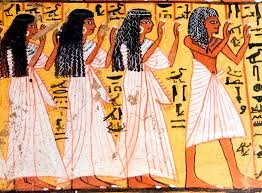
Linen was the foundation of Egyptian dress, especially for the elite. Made from flax grown along the Nile, linen became the perfect textile for Egypt’s climate: light, breathable, and cool. But its significance went far deeper.
- White linen symbolized purity, divine light, and ritual cleanliness.
- This is why priests wore only pure white linen in temples and why wool or leather — considered impure — was forbidden in sacred spaces.
- Royals wore linen washed and bleached multiple times until it was dazzling white — a metaphor for spiritual purity.
Linen wasn’t just material — it was a symbolic medium that connected the wearer to cosmic order and divine harmony.

Everyday Clothing vs. Royal Clothing
Commoner Clothing
Ordinary Egyptians typically wore simple garments:
- Men: shendit — a short linen skirt wrapped around the waist.
- Women: calasiris — a straight, ankle‑length dress, often with straps.
These clothes suited daily life — lightweight, easy to make, and functional in hot weather.
But even these simple garments carried meaning. For example, the pleats found in later periods suggested movement and grace, not just practicality.
Noble Attire
As social status rose, clothing became more elaborate:
Men:
- Embroidered shendits with finer linens.
- Wider belts with decorative patterns.
- Beaded collars.
Women:
- Pleated dresses made from extremely fine linen.
- Decorative bead nets worn over dresses.
- Jewelry that incorporated protective amulets.
Even among elites, clothing told a story of identity: social rank, religious affiliation, and wealth.
Pharaohs: Dressing Like Divine Kings
Pharaohs dressed in many ways like ordinary Egyptians, but the difference was in quality, technique, and symbolism. Their clothes were not just garments — they were ceremonial tools a political symbols.
The Shendit: Royal Kilts
Every Egyptian man — from peasant to king — wore the shendit, a wrapped skirt. But the pharaoh’s version was extraordinary:
- Made of ultra‑fine linen.
- Elaborately pleated and folded.
- Often decorated with motifs or symbolic patterns.
- Secured with a belt that sometimes carried protective symbols.
For pharaohs, the shendit was a statement: it displayed the body of the king as both a ruler a divine being.
Layered Clothing: Old, Middle, and New Kingdom Trends
Over time, pharaonic dress evolved:
Old Kingdom (c. 2686–2181 BCE):
- Simple, knee‑length shendits.
- Basic linen garments without heavy decoration.
Middle Kingdom (c. 2055–1650 BCE):
- Greater use of pleating.
- Garments began to gain layered looks.
- Long tunics appeared in elite attire.
New Kingdom (c. 1550–1077 BCE):
- Tailored clothing (like tunics and capes) became fashionable.
- Extravagant robes with embroidery.
- Complex tailoring techniques — garments with sleeves and fitted shapes.
By the New Kingdom, pharaohs wore layered fashion that wasn’t just clothing — it was ceremonial attire.
Colors and Their Meanings
Egyptian fashion didn’t rely on random shades. Every color had cultural significance:
| Color | Meaning |
|---|---|
| White | Purity, spiritual cleanliness |
| Red | Power, authority |
| Blue | Protection, divine favor |
| Green | Fertility, rebirth |
| Gold | Eternity, the sun god Ra |
Royal garments often combined these colors to broadcast divine messages — not for decoration but for spiritual and political speech.
Royal Headgear: Symbols of Power
No feature of pharaonic costume is as iconic as the crowns and headdresses. These elements said, boldly and unmistakably:
“I am king — and I am divine.”
Let’s explore the most famous ones:
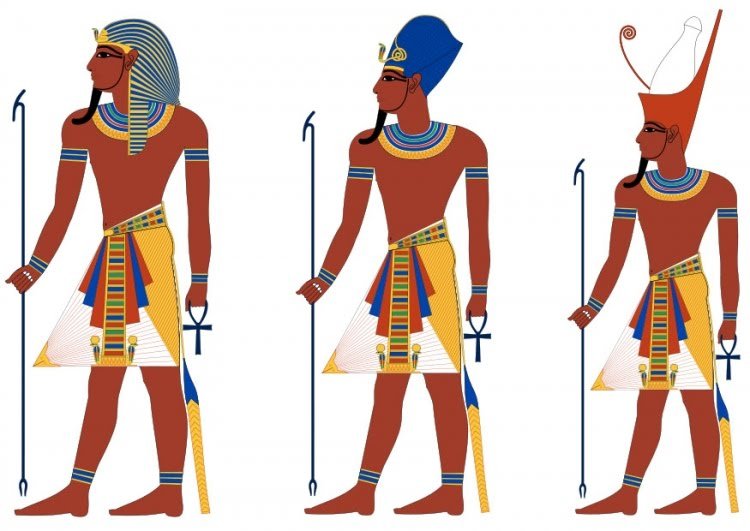
Nemes Headdress
The trademark striped cloth headdress worn by many pharaohs, including Tutankhamun. It wasn’t a metal crown — it was cloth — but it carried massive symbolic force.
- Striped patterns represented royal authority.
- Often decorated with the uraeus (royal cobra) and sometimes a vulture — symbols of protection.
Deshret – The Red Crown
- Symbol of Lower Egypt (the Nile Delta).
- Represented political authority over the northern lands.
Hedjet – The White Crown
- Symbol of Upper Egypt (southern territories).
- Represented southern sovereignty.
Pschent – The Double Crown
- A combination of red and white crowns.
- Symbolized unified Egypt and pharaonic rulership over both lands.
Khepresh – The Blue War Crown
This was worn during military campaigns and sometimes ritual events.
- It wasn’t just decorative — it announced prowess in battle.
- Known in some texts as the “war crown.”
Atef and Hemhemet Crowns
- Atef: Connected with the god Osiris — worn in funerary or religious contexts.
- Hemhemet: More elaborate and symbolic — less commonly used due to its size, but rich in meaning.
Jewelry: Divine Armor
Jewelry in ancient Egypt was more than fashion — it was spiritual armor.
Pharaohs wore:
Usekh Collars
Large, colorful collars made of glazed beads or precious stones like lapis lazuli and turquoise.
- Blue meant divine protection.
- Red meant energy — power over chaos.
- Green represented life and rebirth.
These collars weren’t just beautiful — they were thought to protect the wearer physically and spiritually.
Pectorals
Large pendants that often contained sacred symbols like:
- The Ankh (symbol of life)
- The Scarab (symbol of regeneration)
- The Eye of Horus (symbol of protection)
These were worn close to the heart — literally and symbolically.
The False Beard (Postiche)
One of the most striking features in depictions of pharaohs is the false beard — a stylized, often braided beard attached to the king’s chin.
Why a beard? Because the beard signified divinity. In Egyptian belief, gods wore beards — so for a king to wear one was to claim divine status.
Even powerful queens like Hatshepsut sometimes wore a false beard in statues to emphasize their right to rule — not as women, but as pharaohs of Egypt.
Footwear: Symbols, Not Just Shoes
Ancient Egyptians often went barefoot, especially in sacred spaces where the ground was considered holy. But pharaohs had specially made footwear:
- Sandals made of leather, papyrus, or palm fiber.
- Royal sandals sometimes featured gold plating and engraved motifs — even symbols of enemies, suggesting pharaohs metaphorically “walked over” those they defeated.
- Everyday royal sandals were softer, more comfortable — but still made with fine craftsmanship.
Colors in footwear also had meaning:
- Gold — immortality.
- Black — protection.
- Red — dominance and rule.
Even these small details reinforced royal mindsets and messages.
Hair, Wigs, and Makeup
Shaving and Wigs
Many Egyptians — including pharaohs — shaved their heads for cleanliness and ritual purity. But they didn’t remain bald!
Instead, they wore wigs — elaborate pieces made from human hair, plant fiber, or a mix.
Wigs weren’t just accessories; they signaled:
- Status
- Ceremonial purpose
- Beauty ideals
- Spiritual cleanliness
Royal wigs could have dozens of braided strands and be decorated with gold ribbons, lotus flowers, or precious beads.
Cosmetics with Meaning
Egyptians didn’t use makeup for vanity alone — it had practical and spiritual purposes.
- Kohl (black eyeliner): Made from galena and malachite, protected the eyes from the sun, infections, and — importantly — evil spirits.
- Green and red ochre makeup: Used in rituals, beauty, and symbolic ceremonies.
- Perfumes and scented oils: Applied before religious activities to honor deities and maintain ritual purity.
In some cases, makeup and oils were used denní, especially by royals and priests — not just for appearance, but as part of spiritual discipline.
Children’s Clothing in Ancient Egypt
Children weren’t always blanketed in garments like adults. In many tomb paintings — especially from the Old and Middle Kingdoms — young children appear without clothing, a sign of innocence and purity.
This wasn’t neglect — it was a cultural choice.
- Up to age 6 or 7, children often went unclothed in daily life.
- For special occasions, they wore simple linen skirts (mini shendits) or basic sleeveless tunics.
- Upper‑class children sometimes wore embellished outfits with protective amulets to signal belonging and status.
- A distinctive “side braid” hairstyle marked young children: the rest of the head would be shaved, leaving one braid until puberty.
This reflects how Egyptians linked innocence, ritual purity, and social stages to dress.
Clothing of Servants and Workers
The word “slave” conjures harsh images in modern minds, but in ancient Egypt the system was more nuanced. Some workers served in temples, palaces, or estates with distinct roles.
Their clothing reflected their duties:
- Field workers: Simple shendits, sometimes bare‑chested because of the heat and labor.
- Household servants: Neat, longer shendits or simple tunics — clean, functional, not degrading.
- Temple workers: Special garments tied to their religious roles — sometimes even linen as fine as those worn by lower nobility.
This shows that dress was tied to environment, role, and cultural context, not just status.
Ritual Clothing and Religious Significance
In ancient Egypt, religious life was omnipresent — and clothing played a major part.
Temples required strict dress codes:
- Pure white linen — no wool or leather — because these were considered impure.
- Priests often changed garments multiple times daily based on rituals they performed.
Certain rituals called for dramatic costumes — like animal skins symbolizing cosmic order (leopard skin for the god Maat) or royal strength (lion skin).
Ritual garments weren’t decorative — they were functional symbols that allowed priests and kings to step into roles as intermediaries between gods and humans.
The Power of Symbolism: Clothing as Royal Propaganda
When a pharaoh dressed for public ceremony, ritual, or official portraiture:
- The garments broadcast royal ideology.
- Colors, materials, shapes, symbols — all told a message.
For example:
- A pharaoh wearing a blue crown signaled divine protection and military readiness.
- A pleated linen robe indicated cosmic order, refinement, and mastery over chaos.
- Beaded collars with sacred amulets served as spiritual armor.
Egyptian royal clothing wasn’t just fashion — it was a broadcast system of power, religion, and cultural meaning.
Iconic Facts About Pharaonic Clothing
Here are some fascinating truths about ancient Egyptian fashion that go beyond stereotypes:
- Linen was more than fabric — it was sacred.
- The Tarkhan dress predates most known tailored garments in world history.
- Pharaohs sometimes wore garments woven with real gold threads.
- Crowns weren’t ornamental — each represented political authority.
- Even queens who ruled wore symbols (like the false beard) to assert legitimacy.
- Jewelry often doubled as protective amulets.
- Kohl wasn’t just makeup — it protected the wearer physically and spiritually.
- Royal sandals could be engraved with enemies — a symbolic declaration of power.
- Colors had deep ritual and political meaning.
- Clothing changed with roles, locations, and sacred ceremonies — not just seasons.
These weren’t fashion choices — they were layers of meaning woven into every thread.
FAQ : what-did-the-egyptian-pharaohs-wear
1. What did the Egyptian pharaohs wear on a daily basis?
Pharaohs typically wore a finely pleated shendit (a knee-length linen skirt) tied with a decorated belt, sometimes layered with a long robe or tunic. Linen was the main fabric due to Egypt’s hot climate, and royal garments were made from the highest quality, bleached, and often embellished with gold threads. Daily attire emphasized both comfort and status.
2. What were the ceremonial clothes of Egyptian pharaohs?
For religious or state ceremonies, pharaohs wore elaborate garments:
- Nemes headdress or ceremonial crowns
- Linen robes with intricate pleats
- Jewelry such as collars (usekh), bracelets, and pectorals
- Leopard or lion skin aprons for ritual significance
Every piece symbolized divine authority, cosmic order, and protection from evil.
3. What kind of crowns did Egyptian pharaohs wear?
Pharaohs had several crowns, each with a symbolic purpose:
- Hedjet – White crown of Upper Egypt
- Deshret – Red crown of Lower Egypt
- Pschent – Double crown for unified Egypt
- Khepresh – Blue war crown for battle
- Atef & Hemhemet – Used in funerary or ritual contexts
The crowns often included symbols like the uraeus cobra and vulture for protection.
4. What fabrics were used in pharaohs’ clothing?
Linen was the primary material, prized for its lightness and symbolic purity. Some garments incorporated gold threads or beads for decoration. Leather and animal skins (lion or leopard) were occasionally used for ritual attire. Wool and other fabrics were avoided in temples because they were considered impure.
5. Did pharaohs wear shoes?
Yes, pharaohs wore sandals made of leather, papyrus, or palm fibers. Royal sandals were often gold-plated or engraved with symbols of enemies, signifying dominance. In sacred spaces, they walked barefoot as a sign of ritual purity.
6. Did Egyptian pharaohs wear wigs and makeup?
Absolutely. Pharaohs and queens shaved their natural hair for hygiene and religious reasons. They wore elaborate wigs, often braided and decorated with gold or beads. Kohl eyeliner, red and green ochre, and scented oils were applied not only for beauty but also for protection against the desert sun and spiritual safeguarding.
7. What did pharaohs’ children wear?
Young children often went unclothed until about age 6–7, symbolizing innocence. For special occasions, they wore mini versions of adult clothing, such as small shendits or linen tunics, sometimes paired with belts, jewelry, or symbolic amulets. A distinctive side braid was common to indicate youth.
8. Why was clothing important for pharaohs?
Clothing was not just aesthetic; it communicated social rank, divine favor, and political authority. Through fabrics, colors, and accessories, pharaohs projected messages of purity, power, and cosmic order. Ritual garments also allowed them to act as intermediaries between gods and people.
9. What colors did pharaohs wear and what did they mean?
Colors were symbolic:
- White: Purity and divinity
- Red: Power and authority
- Blue: Protection from evil
- Gold: Eternity and divine favor
- Green: Fertility and rebirth
Every color choice reinforced a visual narrative of rulership and divine status.
10. Where can I see authentic pharaoh clothing today?
Original garments and artifacts are displayed in:
- Grand Egyptian Museum, Giza
- Egyptian Museum, Cairo
- Metropolitan Museum of Art, New York
- British Museum, London
Items include the Tarkhan dress, royal shendits, ceremonial sandals, crowns, jewelry, and amulets.
Conclusion: The Pharaoh’s Wardrobe Was a Language
What Egyptian pharaohs wore transcended style. It was a visual language sculpted into the very fabric of ancient life — one that spoke of gods, power, protection, identity, unity, and cosmic order.
From the oldest tailored garment in history to crowns that symbolized unified rule, from linen washed until it shone like the sun to amulets woven into ceremonial collars — Egyptian royal clothing was a living declaration:
“I am pharaoh — protector, ruler, divine mediator.”
In every pleat and color, there lies a story, beliefa culture that shaped one of humanity’s greatest civilizations.




























 English
  German
  French
  Polish
  Russian
  Czech
Czech  Spanish
  Romanian
  Turkish
  Italian
  Hungarian
Komentáře (0)